

Our impact together
Celebrating everything we’ve achieved together in 2025/26.
Looking back on a phenomenal 2025/26
This has undoubtedly been an outstanding year for not just Pancreatic Cancer UK but also the whole community of people affected by pancreatic cancer. From research breakthroughs and government action through to delivering better quality of care and support, 2025/26 was a truly exceptional year for our charity.
Thanks to your support, we are making huge strides in driving positive change for people affected by pancreatic cancer. Read on to find out more about everything we achieved this year and how our supporters helped to make a real difference to the lives of people waiting for change.
Funding pioneering research
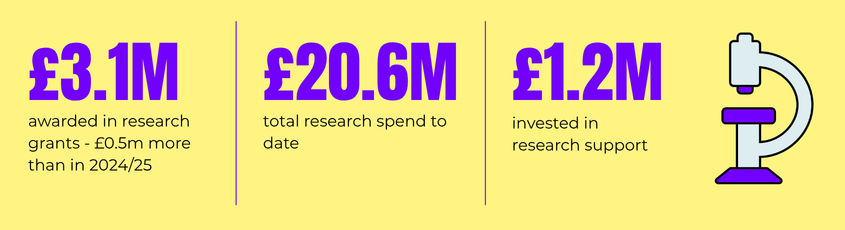
Investing in research means we can help enable scientists to break new ground in the discovery and development of methods to detect, diagnose and treat pancreatic cancer. This year, we awarded £3.1 million in grants to support scientists looking into key research areas such as immunotherapy, novel targets for pancreatic cancer treatment and, crucially, the development of a breath test to improve early detection.
Objective 1: Earlier and faster diagnosis
A turning point in driving early detection has been the ongoing development of the world’s first breath test for pancreatic cancer. This year, we awarded £1.1 million in funding to Professor George Hanna at Imperial College London to progress his research through to a larger clinical trial. Involving almost 6,000 patients in 40 hospitals across the country, this couldn’t have been achieved without the aid of our supporters and their dedication to raising much-needed funds and awareness of the need for this test.
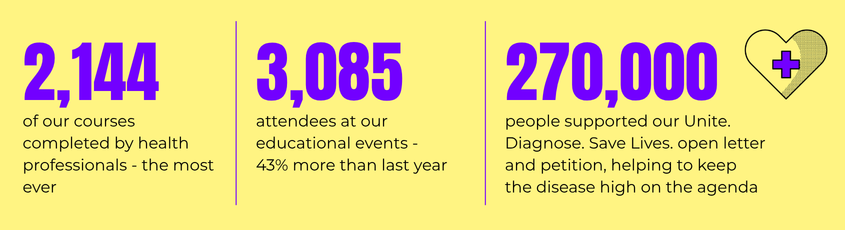
This year also saw the launch of our Unite. Diagnose. Save Lives. campaign which called on governments across the UK to put pancreatic cancer higher on the political agenda. Senior politicians backed the campaign, along with 1,000 of our supporters who wrote to their parliamentary representatives demanding change. Our voices reached the House of Commons and led to the positive change we see reflected in the National Cancer Plan for England.
Underpinning our campaigns is our continuous work to raise public awareness of symptoms and monitor early risk. Media opportunities throughout the year enabled us to promote symptoms awareness, and we published our first inquiry report into improving early detection and rapid diagnosis as Secretariat of the All-Party Parliamentary Group on Less Survivable Cancers. Lastly, our groundbreaking online Family History Checker has been used over 71,000 times since 2024, leading over 350 people at high risk of pancreatic cancer to register on a national monitoring programme.
Objective 2: Faster treatment breakthroughs
With the help of our supporters, this has been an exceptional year for getting pancreatic cancer on the political agenda. A decade of campaigning has finally resulted in the Government’s National Cancer Plan for England, which promises to prioritise less survivable cancers, including pancreatic cancer, and accelerate research. We wouldn’t have been able to do this without our supporters and partners who wrote to MPs, shared their experience and helped us shape our recommendations for the change we want to see.
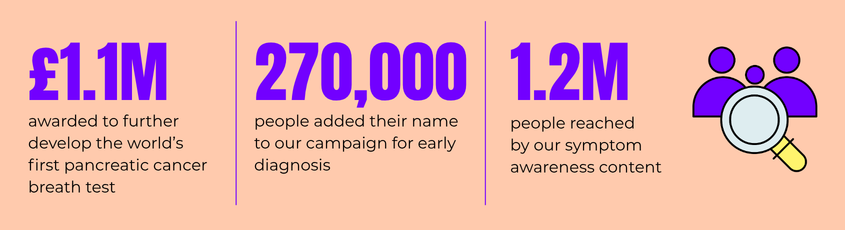
We have also seen the delivery of the landmark Rare Cancers Act, the first ever legislation targeting rare cancers in England. This commits current and future governments to accelerating and funding research into diagnosis and treatment breakthroughs. While this demonstrates great progress for England, we are continuing to call for Scotland, Wales and Northern Ireland to implement similar strategies to benefit people with pancreatic cancer and other rare cancers.
Of the grants awarded this year, £1.2 million has gone towards funding research into finding better, kinder treatments. We supported peer-to-peer knowledge exchange through our two-day Discovery and Translational Research Forum and new Research Strategy Group, enabling researchers to build relationships, share expert insights and shape strategies for research-focused efforts.
Objective 3: High-quality care everywhere
It is paramount that people with pancreatic cancer receive the care and treatment they deserve. Throughout everything we do, we strive to amplify the voices of patients and their loved ones to reach decision-makers and ensure initiatives are driven by real experience.
Our political lobbying called for governments across the UK to implement the highest standards of diagnosis, treatment and care as laid out in our Optimal Care Pathway recommendations. This effort has been replicated across the devolved nations, where we pushed for robust pathways for pancreatic care and provided expert guidance where needed.
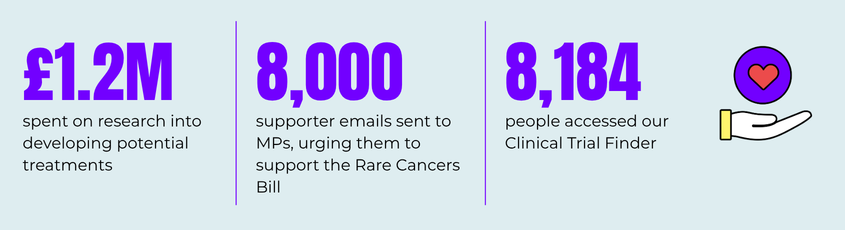
In addition to government action, ensuring that health professionals stay informed is crucial to ensuring good quality of care for pancreatic cancer patients. We delivered educational courses and events throughout the year with high levels of positive responses from attendees. We also launched The Big Picture, an online platform collating real life experiences of pancreatic cancer diagnosis, treatment and care to provide health leaders with evidence to support reforms in how this cancer should be managed.
Objective 4: Better quality of life
From working closely with the pancreatic cancer community, we know that there is not a one-size-fits-all approach to care. That is why we advocate so strongly for ensuring that patients and their loved ones have access to the information they need to make informed decisions about their care.
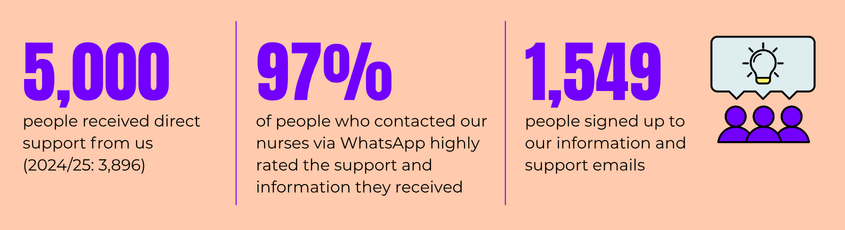
For 2025/26, we continued to provide high-quality services, tools and information for those that need it most. We updated our digital and printed materials to ensure people can easily receive the information they need, including our easy-read information which was co-developed with people with learning disabilities. Our Support Line was contacted by 1,800 people, and over 350 people used our new WhatsApp channel to reach out to our nurses, with very positive responses rating the quality of support they received. This was also seen across our Circles peer support groups, which saw 1,239 new joiners.
In total, 5,000 people received direct support from us this year, and we plan to expand our offerings in the future to encompass specific needs using insights from people with lived experience.
Doubling our income by 2028
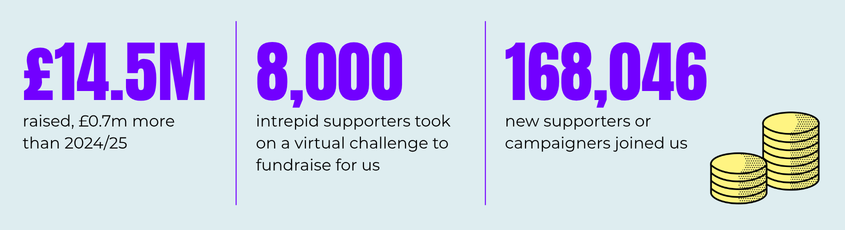
This year, we have raised an unprecedented £14.5 million, our highest result to date. This would not have been possible without our supporters and their dedication to driving progress for those affected by pancreatic cancer.
The TCS London Marathon 2025 alone brought in an incredible £2.8 million and was a real highlight of the year for raising awareness. We also saw other fitness challenges achieve great success, including the Three Peaks Challenge, four virtual challenges and individual supporter challenges in memory of their loved ones.
Other fundraising and awareness achievements from the year include our prize draw for a set of signed Harry Potter books, our annual partnership with St Pancras during Pancreatic Cancer Awareness Month, and the Double Donations campaign, which raised £341,000 through matched philanthropic donations. We are also incredibly grateful to our corporate fundraisers and legacy gifts, without which we would not have been able to achieve such a record year.
Thanks to you, we are able to continue to fund life-saving research and our support services to bring real change and give more than hope for people affected by this brutal disease.
Latest news
-

10 September 2026
Responding to the Welsh Government’s call for evidence for the Welsh Cancer Strategy
The Welsh Government are developing a National Cancer Strategy, and they want to hear from you on what should be included.
Read more -
10 September 2026
Signs of progress for pancreatic cancer care
We share some key findings and recommendations from the National Pancreatic Cancer Audit published on 10th September 2026.
Read more -
27 August 2026
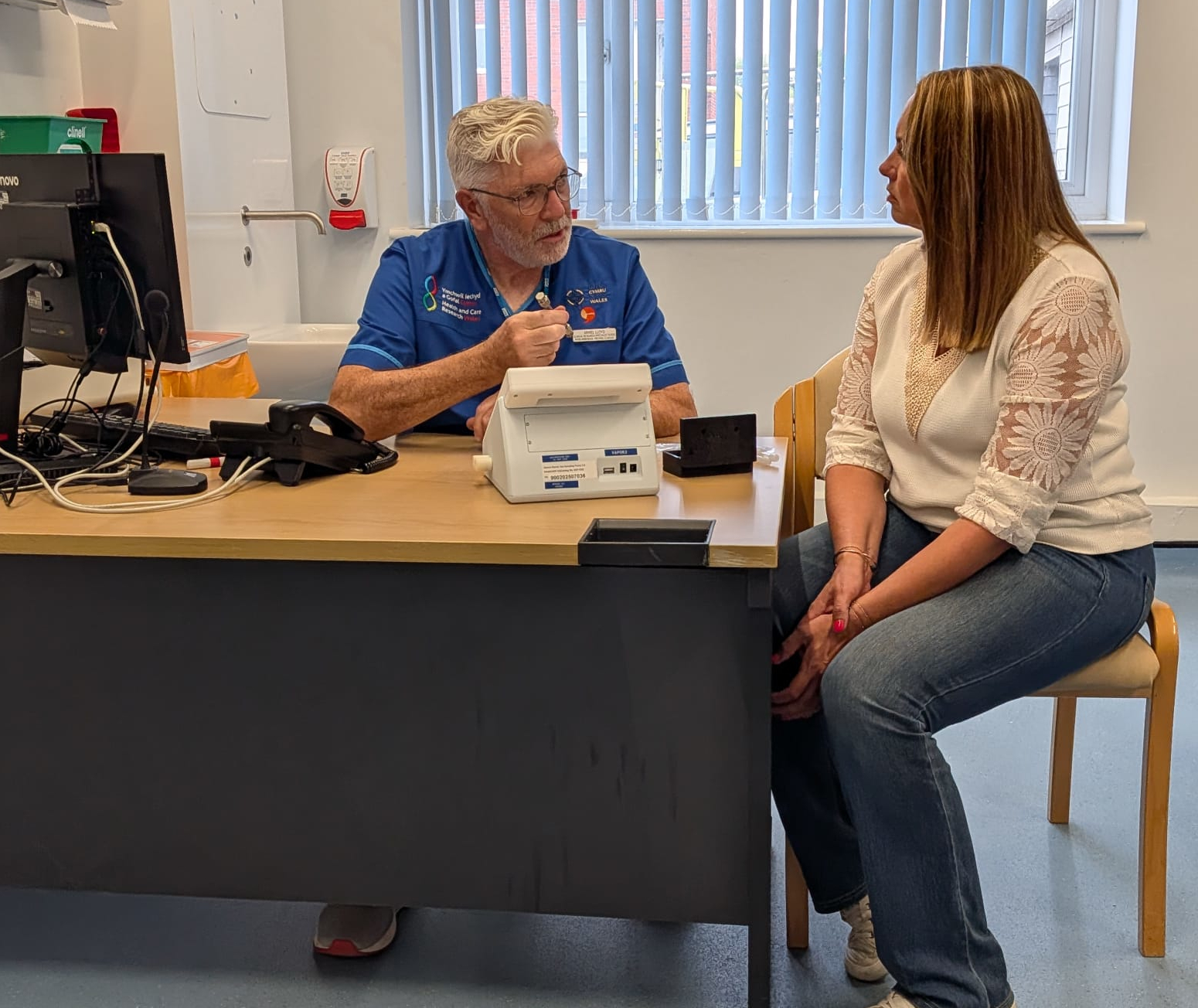
Advanced clinical trial for world-first pancreatic cancer breath test begins recruiting in Wales
A world-first breath test for pancreatic cancer is now being trialled on patients outside of England for the first time, at Wrexham Maelor Hospital.
Read more


-
10 September 2026
Responding to the Welsh Government’s call for evidence for the Welsh Cancer Strategy
The Welsh Government are developing a National Cancer Strategy, and they want to hear from you on what should be included.
Read more -
10 September 2026
Signs of progress for pancreatic cancer care
We share some key findings and recommendations from the National Pancreatic Cancer Audit published on 10th September 2026.
Read more -
27 August 2026
Advanced clinical trial for world-first pancreatic cancer breath test begins recruiting in Wales
A world-first breath test for pancreatic cancer is now being trialled on patients outside of England for the first time, at Wrexham Maelor Hospital.
Read more