Review a document for a clinical trial
This is a Phase 3 clinical trial designed to evaluate whether treatment with daraxonrasib following completion of chemotherapy improves survival
Our Research Involvement Network (RIN) is a group of people who each have a personal connection to pancreatic cancer, through being patients, carers, loved ones or survivors.
Being a part of our RIN gives you the opportunity to help shape pancreatic cancer research. It connects you to the exciting and important changes happening in pancreatic cancer research, gives you the opportunity to meet researchers and help us determine which research we should support with the funds raised by our supporters.
Within our RIN, each member has unique experiences of pancreatic cancer diagnosis, treatment and care and this is your lived experience. These diverse insights can help pancreatic cancer researchers shape their work to ensure it is relevant to people affected by pancreatic cancer.
I became involved with the Research Involvement Network to help Pancreatic Cancer UK to both find a way to detect this insidious disease early and to also find a way to cure it. If I can help in this small way, I will do it in memory of the man I loved and lost to pancreatic cancer, in the hope that others don’t suffer in the same way.
Involving people with lived experience at all stages of the research process ensures that the research being conducted is relevant to the needs of people affected by pancreatic cancer.
This means moving beyond thinking of people with lived experience as participants in a study, but as partners in setting research priorities, recommending the research that should be funded and guiding researchers with their work.
As a member of our RIN, you can share your experiences to inform and influence research projects. Research ideas which have been informed by lived experience are not only more likely to be more relevant to clinical practice; they are also more likely to be awarded funding.
To join our RIN, you will need to complete a short application form which will ensure you receive our monthly RIN email bulletin.
At the beginning of each month the Research Team will send the bulletin to RIN members which includes the latest opportunities to get involved in pancreatic cancer research. This can include any researcher who is undertaking a project in pancreatic cancer research, not just our current grant holders or researchers applying to our funding schemes.
The bulletin may also contain news and research updates as well as examples of ways our RIN are shaping pancreatic cancer research.
You are welcome to sign-up to any opportunities which you are interested in, and you can choose the time and opportunity which works best for you.
All these opportunities draw upon your unique experiences as someone affected by pancreatic cancer.
You can share as much or as little of your personal experience as you feel comfortable doing. You do not need to have a research or scientific background to be a member of RIN.
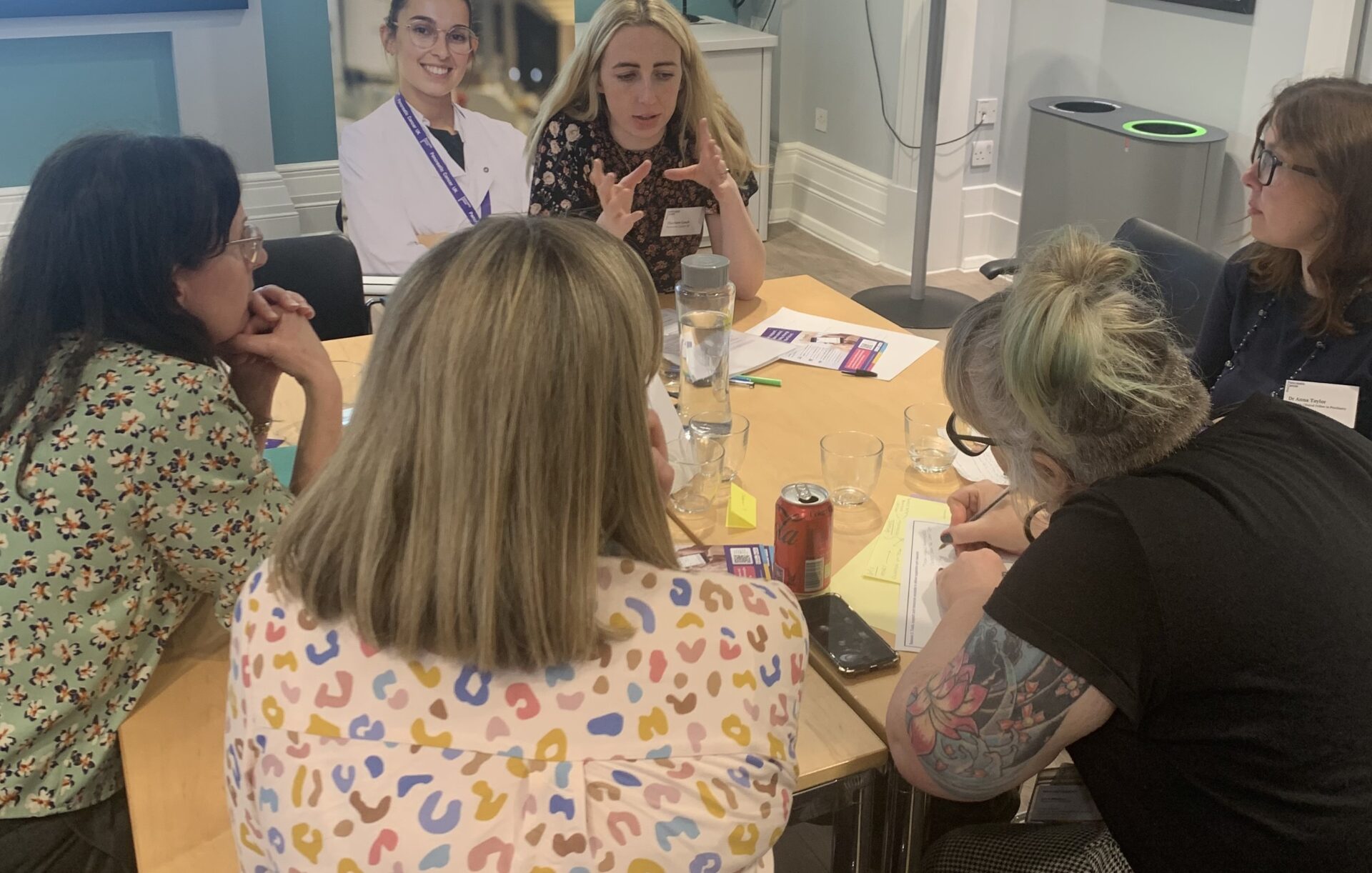
Researchers may ask you to comment on documents to ensure that they can be understood by their intended audience. These documents can range from project summaries in a grant application to information leaflets for a clinical trial.
Pancreatic Cancer UK run various grant funding rounds and we ask our Research Involvement Network to review the applications received from researchers to ensure they are relevant to people affected by pancreatic cancer.
Focus groups consist of a small group of individuals with lived experience along with a researcher. They are opportunities to find out more about a project, ask questions of the researcher and for the researcher to hear what you think about their project based on your personal experiences. They are a great way to stimulate discussion on a research project and can be virtual or in person.
Researchers may want the voice of lived experience to be involved for the duration of their project. This would involve attending meetings to discuss the progress of the project and commenting on the next steps.
Researchers may want opinions or answers to specific questions to help shape their research.
Researchers may want to share their research results with people affected by pancreatic cancer and invite individuals to their research facilities.

This is a Phase 3 clinical trial designed to evaluate whether treatment with daraxonrasib following completion of chemotherapy improves survival

Professor Sheraz Markar is a surgeon aiming to investigate whether GLP-1 given before surgery can reduce complications after surgery. GLP-1 is a natural hormone released in the intestine in response to eating.

Our policy team seeks volunteers affected by pancreatic cancer to share what matters most about research and clinical trials.

Folinic Acid (Calcium folinate) is used in the FOLFIRINOX chemotherapy regimen, however the dose used in different hospitals varies. Calum Polwart, a consultant oncology pharmacist and Conor O'Neil, a clinical fellow, hope to agree a standard dose.

Professor Nigel Trudgill is collaborating with a number of clinical professionals to investigate in every hospital in England why pancreatic cancers may have been missed on previous scans or endoscopic ultrasound examinations.

Cure51 studies long-term cancer survivors to create a global database of their biological data. By understanding these outliers, the company aims to develop new, first-in-class cancer treatments.

Dr Dominic O'Connor from the University of Nottingham is undertaking a study to test whether neuromuscular electrical stimulation (NMES) is a safe and feasible way to prevent muscle loss and support recovery after pancreatic cancer surgery.
If you have any questions about our Research Involvement Network, please get in touch.
The Research Team