Could your team get involved?
Clinical teams who are interested in taking part in the study are invited to contact Mona Khoo, Research Project Manager at the Christie NHS Foundation Trust, at mona.khoo@nhs.net
People affected by pancreatic cancer often experience delays in getting a diagnosis and having access to treatment. This can mean that people may start off well enough for treatment, but long waits lead to them becoming too unwell to receive it.
In the UK today, two in three people with pancreatic cancer don’t get any active treatment.
We’re now funding IMAGINE PACT: a study that aims to improve consistency in pancreatic cancer diagnosis and treatment by standardising how scans, carried out by radiologists, are reported on. This could help specialists better understand scan results and improve treatment decision-making – helping more people with pancreatic cancer get faster treatment.
The latest National Pancreatic Cancer Audit report found that, among people who had cancer treatment following an urgent GP referral, the average time from referral to treatment was 74 days in England and 76 days in Wales. This is almost double our Optimal Care Pathway recommendation of 42 days.
These figures show that action is urgently needed to get more patients diagnosed and treated faster. They show the importance of timely scan reporting and clear communication between the specialists responsible for deciding patients’ treatment.
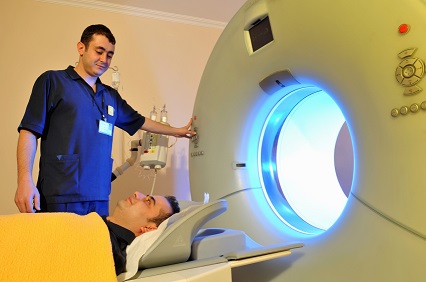
People with pancreatic cancer need scans, such as CT or MRI scans. These help to work out the size of the cancer, whether it has spread, and the best treatment options.
A radiologist’s role is to look at and assess important details on the scan. Surgeons and oncologists rely on this information when discussing treatment options, including whether an operation may be possible.
However, pancreatic cancer scan results can be complex to understand. There can be differences in the terms used and the level of detail recorded, which can make findings harder to compare. This can result in specialists interpreting scans and assessing treatment options differently. As a result, treatment decisions can vary depending on where a patient is being treated.
Health professionals working in pancreatic cancer came together to identify how to develop a more consistent approach to assessing scans. This led to the development of the Pancreatic Cancer reporting Template-UK, known as PACT-UK. It was developed by the clinical community with support from Pancreatic Cancer UK and has been welcomed by national health professional bodies, such as the Royal College of Radiologists and The British Society of Gastrointestinal and Abdominal Radiology.
This standard form collects clear and consistent information about scan results. It may help professionals like surgeons and oncologists to make better, faster treatment decisions with more confidence. This could help to make sure people can get consistent access to the right treatment wherever they are being cared for.
Now, the IMAGINE PACT study will assess how well this template will work in everyday NHS practice. We hope this will improve consistency in how pancreatic cancer is diagnosed and treated.
Clinical teams who are interested in taking part in the study are invited to contact Mona Khoo, Research Project Manager at the Christie NHS Foundation Trust, at mona.khoo@nhs.net
IMAGINE PACT is a multicentre study sponsored by The Christie NHS Foundation Trust and led by Chief Investigator Dr Ganesh Radhakrishna.
It will evaluate how well the template captures important findings from scans in routine clinical practice. The findings will help identify where the template works and where further changes or training may be needed.
IMAGINE PACT will also bring together pancreatic CT and MRI scan results and the PACT-UK reports to create a research ‘bank’ of pancreatic cancer images. This will help to ensure consistent reporting across participating centres.
This resource may also support future research, clinical learning and initiatives to improve treatment and care for people with pancreatic cancer.
IMAGINE PACT could contribute to:
Patients, families and supporters can help by raising awareness of IMAGINE PACT.
If you or someone close to you has been affected by pancreatic cancer, you could start by asking your local treatment team:
“I’ve heard about IMAGINE PACT, a research study looking at consistency in pancreatic cancer scan reporting. Are you supporting the IMAGINE PACT study?”
You do not need to organise research participation yourself. Each hospital would need to consider this through its own clinical and research processes.
NHS centres across the UK that specialise in treatment of people with pancreatic cancer are taking part in the study across Manchester, Leeds, Newcastle, London and Glasgow.
The team is now looking for more NHS hospitals interested in taking part. Participating hospitals will help to evaluate PACT-UK in routine practice and contribute to a shared research resource.
Clinical teams who are interested are invited to contact Mona Khoo, Research Project Manager at the Christie NHS Foundation Trust, at mona.khoo@nhs.net