Driving Treatment Breakthroughs in Westminster
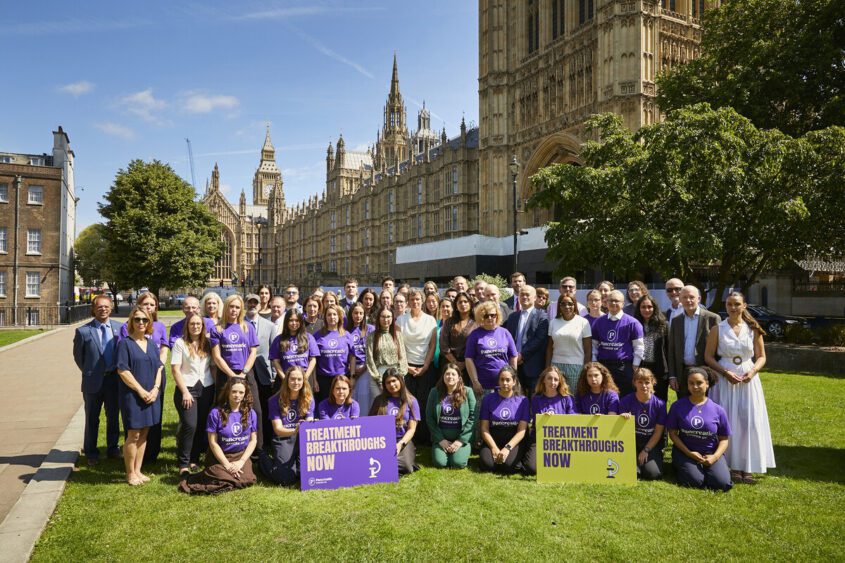
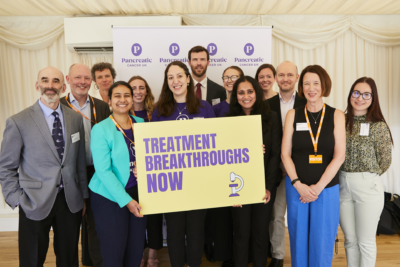
On 16th June, we hosted a parliamentary reception in Westminster, calling on Government to take urgent action to drive treatment breakthroughs for pancreatic cancer.
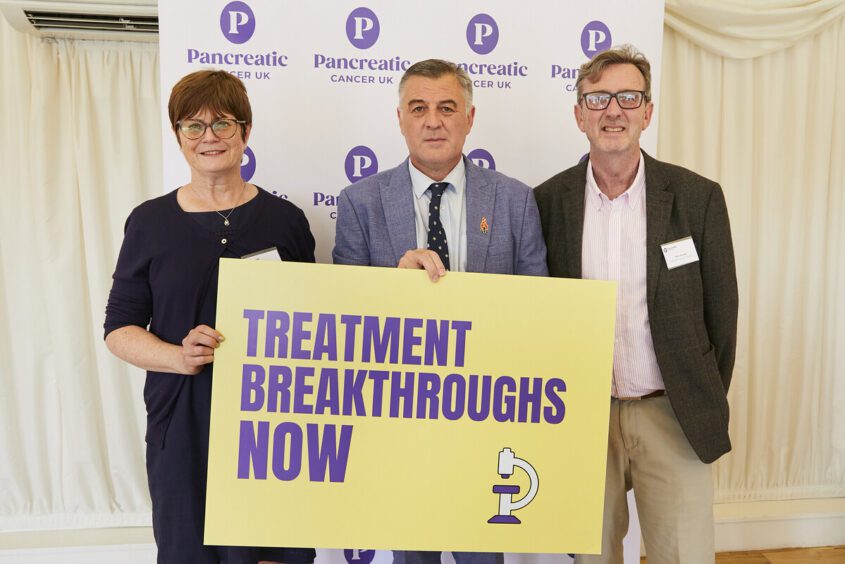
Last month we held our parliamentary reception on driving treatment breakthroughs in Westminster, bringing together people with lived experience of pancreatic cancer, researchers, clinicians, civil servants and over 50 MPs and Peers.
Find out if your MP came along
Assistant to Gregory Stafford MP
Adam Jogee, Newcastle-under-Lyme
Amanda Hack, North West Leicestershire
Antonia Bance, Tipton and Wednesbury
Baggy Shanker, Derby South
Bambos Charalambous, Southgate and Wood green
Baroness Redfern
Baroness Golding
Ben Obese-Jecty, Huntington
Caroline Nokes, Romsey and Southampton
Assistant to Nigel Farage, Clacton
Catherine McKinnell, Newcastle Upon Tyne North
Charlotte Cane, Ely and East Cambridgeshire
Clive Jones, Wokingham
Dame Harriet Baldwin, West Worcestershire
David Burton-Sampson, Southend West and Leigh
Scott Arthur, Edinburgh South
Emily Darlington, Milton Keynes Central
Gagan Mohindra, South West Hertfordshire
Graham Stuart, Beverley and Holderness
Hannah Spencer, Gorton and Denton
Ian Byrne, Liverpool West Derby
Ian Lavery, Blyth and Ashington
Jim Shannon, Strangford
John Milne, Horsham
Julie Minns, Carlisle
Kerry McCarthy, Bristol East
Kevin Bonavia, Stevenage
Lizzi Collinge, Lancashire
Manuela Perteghella, Stratford on Avon
Markus Campbell-Savours, Penrith
Martin Rhodes, Glasgow North
Assistant to James Asser, West Ham and Beckton
Mike Tapp, Dover and Deal
Mike Wood, Kingswinford and South Staffordshire
Monica Harding, Esher and Walton
Munira Wilson, Twickenham
Neil Shastri-Hurst, Solihull West and Shirley
Nicholas Dakin, Scunthorpe
Paul Kohler, Wimbledon
Paulette Hamilton, Birmingham Erdington
Peter Swallow, Bracknell
Rebecca Smith, South West Devon
Robin Swann, South Antrim
Assistant to Shivani Raja, Leicester East
Gavin Williamson, Stone, Great Wyrley and Penkridge
Sir John Hayes, South Holland and The Deepings
Sir Roger Gale, Herne Bay and Sandwich
Steff Aquarone, North Norfolk
Vikki Slade, Mid Dorset and North Poole
Assistant to Graham Stuart MP
Warinder Juss, Wolverhampton West
Will Forster, Woking
It has been an incredibly important year for pancreatic cancer, with the National Cancer and Rare Cancers Act setting out bold plans for change.
Our event was an important opportunity to ensure that pancreatic cancer remains a top government priority in the years ahead, and to drive more treatment breakthroughs for this devastating cancer.
We asked MPs and Peers to join us in calling for:
- More chances: personalising treatment by testing tumours whenever possible
- More progress: a system that fast-tracks people onto clinical trials
- More lives saved: funding for research to support future pancreatic cancer treatments and trials.
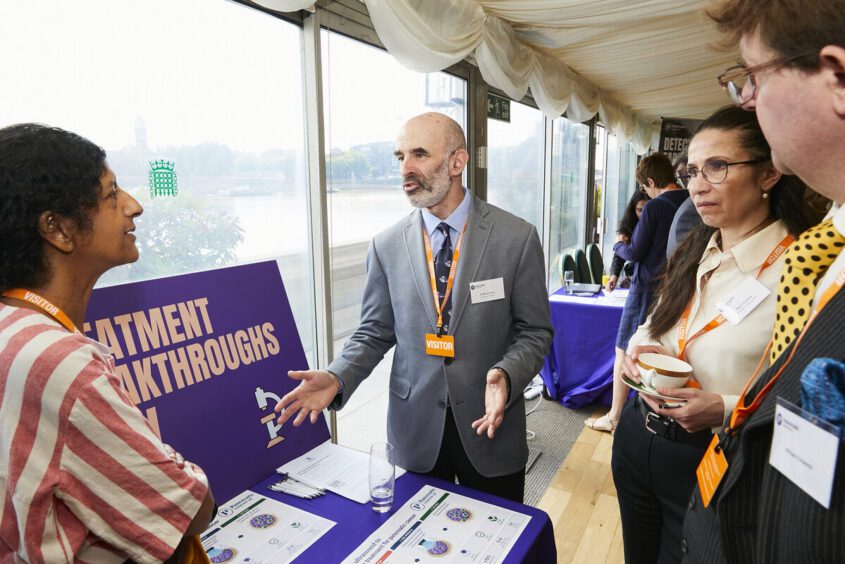
During the reception, MPs and Peers spoke with people who have lived experience of the disease, to truly understand the urgency behind why driving treatment breakthroughs is essential.
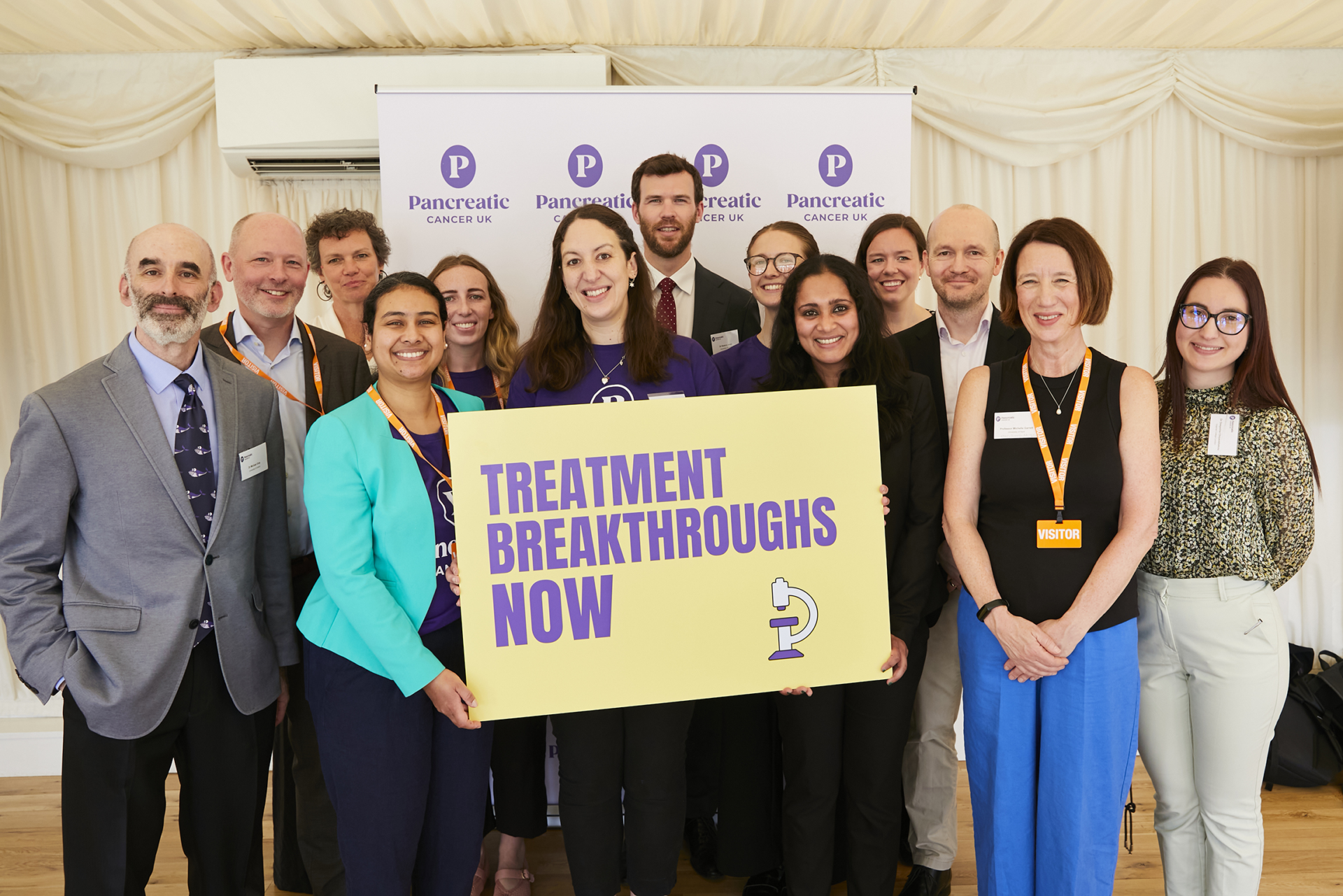
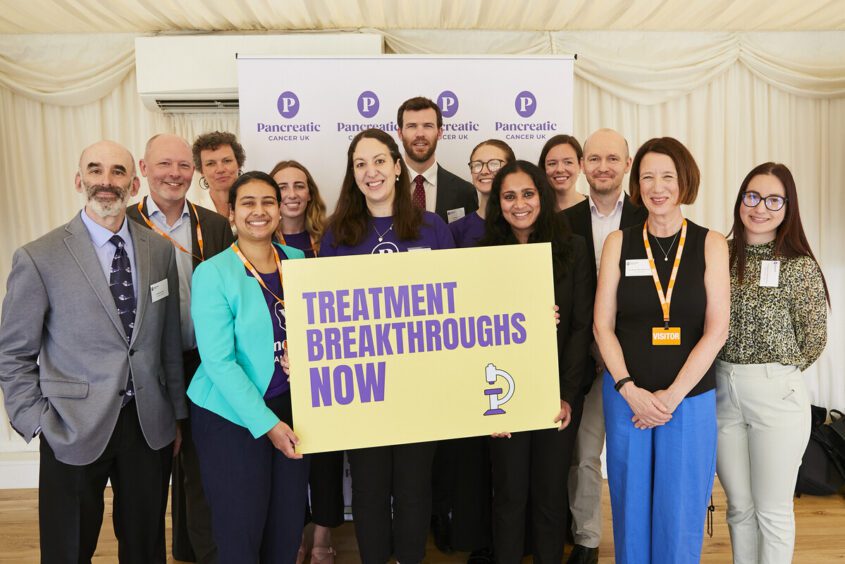
In addition, we hosted a research marketplace, showcasing three Pancreatic Cancer UK-funded research projects which are leading the way in treatment breakthroughs and helping to develop our understanding of this disease. You can read more about these projects below.
Project 1: Dr Shalini Rao and Professor Jason Carroll, University of Cambridge
Exploring how the protein FOXA1 drives the spread of pancreatic cancer
Pancreatic cancer is an aggressive disease that spreads quickly around the body. Over 80% of patients are diagnosed at a late stage, after their cancer has spread. At this point surgery, the only potentially life-saving treatment for pancreatic cancer, is no longer an option.
Proteins called transcription factors are responsible for controlling processes that take place in cells by turning genes on and off.
A transcription factor called FOXA1 has previously been shown to be important in driving the spread of pancreatic cancer, but less is known about what other proteins work with FOXA1 to control this process.
In this project, the research team is investigating which proteins work with FOXA1 in pancreatic cancer metastasis. They will use their findings to identify genes which play important roles in this process and could be promising targets for the development of new treatments for advanced pancreatic cancer, that aim to stop pancreatic cancer spreading.
Project 2: Dr Despoina Chrysostomou, Imperial College London
Could gut bacteria be used to predict the effectiveness of chemotherapy in pancreatic cancer?
Chemotherapy is one of the main treatments for pancreatic cancer. It is used to kill cancer cells and aims to slow tumour growth.
Chemotherapy involves potent drugs which also kill healthy body tissue in the process, causing side effects like sickness, tiredness and infection.
Not all patients respond to chemotherapy in the same way. Identifying which patients are most likely to respond well to chemotherapy could save those who are unlikely to respond well from undergoing harsh treatment, avoiding a negative impact on their quality of life.
Bacteria in the mouth and gut are thought to play a role in response to chemotherapy. In this project, researchers aim to determine the role that these bacteria play in the effectiveness of chemotherapy for pancreatic cancer. They hope to ultimately develop a test to predict people’s response to treatment, which could be used to save thousands of people from undergoing harsh treatment which is likely to have limited benefit.
Project 3: Dr Keaton Jones and Dr Michael Gray, University of Oxford
Using focused ultrasound to boost the immune response to pancreatic cancer
We desperately need new and more effective treatment options for pancreatic cancer.
Immunotherapy is a rapidly emerging new treatment option which has already been very successful in treating other forms of cancer such as leukaemia. However, pancreatic cancers are very good at hiding from the immune system and suppressing its activity.
Pancreatic cancer cells are also surrounded by dense tissue that resists medicine. It is thought that this could be one reason why immunotherapy has so far been less successful in pancreatic cancer.
Combining immunotherapy with other treatment options, which aim to first weaken the tumour’s physical resistance, could help the drugs more effectively reach and destroy the cancer cells.
In this project, the research team are investigating the potential of combining immunotherapy with another treatment called focused ultrasound. This technique uses high frequency sound waves to disrupt dense tumour tissue, making it easier for immunotherapy drugs to reach and destroy cancer cells. Focused ultrasound is also thought to be able to boost the immune response, potentially making immunotherapy even more effective.
The research team aims to understand how different types of focussed ultrasound treatment interact with the immune system and different immunotherapy drugs, to identify the best way of combining these two techniques to most effectively treat pancreatic cancer.



We were also joined by celebrity chef, and incredible ambassador for Pancreatic Cancer UK, Sabrina Gidda. She shared her experience of losing her mum to pancreatic cancer, how it could have been different had there been more treatment options available, and how it has affected her family.
We also had a speech from Professor Richard Gilbertson, who called for more to be done to support the research community to unlock more treatment breakthroughs. Our CEO Diana also shared her reflections on the vital need for Government to prioritise pancreatic cancer in the delivery of the National Cancer Plan, and ensure that people affected by this deadly disease get to benefit from life-saving treatments and therapies.
A huge thank you to everyone who attended the reception, including our brilliant researchers and supporters.
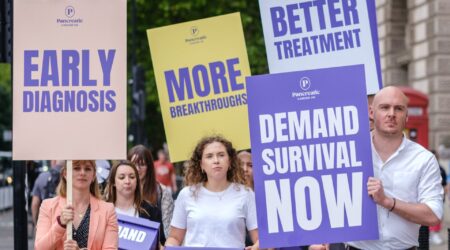
Thank you to over 1,000 of you who got in touch with your MP and asked them to come along to this event. Without you, we wouldn’t have been able to do this. Together, we will drive treatment breakthroughs and Demand Survival Now.