


Keeping active

Hello, it’s Lynne and Jeni, specialist pancreatic cancer nurses on the Support Line.
This is a guest blog from Dr Dominic O’Connor who is an Assistant Professor at the University of Nottingham. Dominic is a cancer exercise specialist. He gives information on the benefits of exercise and some useful resources that can help.
Exercise and pancreatic cancer
We all know physical activity and exercise are important for our health. It can improve our fitness, strength and mental wellbeing. Exercise is also important for people with a pancreatic cancer diagnosis. It can help you prepare for treatment and deal with its side effects.
But most people find it hard to exercise. People with cancer can also face extra challenges, with increasing fatigue levels from treatment. The desire to lie down all day can make fatigue worse. It can also worsen depression and anxiety.
The American College of Sports Medicine (ACSM) cancer guidelines recommend achievable activity levels. They suggest aerobic activity three times a week for at least 30 minutes and strengthening activities twice a week.
Aerobic activities increase your heart and breathing rate, and include things like walking, climbing stairs and cycling. Strengthening activities increase the strength of your muscles, and include things like lifting weights, repeatedly getting up from a chair and again, climbing stairs.
You can find examples of exercises you could try below. Building up to this amount of exercise each week while having treatment has a host of benefits, including:
- improved physical function, for example, being able to walk further, or finding it easier to get up out of a chair
- reduced fatigue
- reduced anxiety
- reduced depressive symptoms
- improved quality of your daily life.
Building your strength and fitness levels is a good idea at any time. But when you have cancer it can help you cope better with your illness and treatment.
If you are starting to exercise for the first time, talk to your doctor before starting, as everyone is different. Ask about any precautions you should consider, which will make exercising as safe as possible.
Getting started at home
Many people think that strengthening activities are only possible in gyms with fancy equipment. For people with cancer, home-based exercise can be safely carried out with no equipment. But exercising at home may be daunting if you don’t know what to do.
These are some simple but effective exercises that can be completed using no equipment.
- Marching on the spot, repeated in intervals of 30 seconds to 1 minute with an equal length of rest is a good way to start working the heart and lungs.
- Repeated “sit to stands”, where you stand up from sitting on a chair. These can be done 8 to 12 times. Do these several times a day to help strengthen your legs.
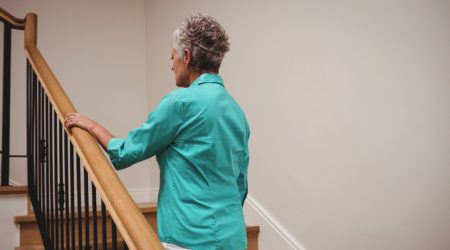
- If you have stairs in your home, going up and down these several times a day is also a great way to build some strength and endurance in your legs.
- You can also use household items such as tins of food or filled water bottles as weights, to help strengthen your upper body.
These exercises may be new to you but there are wonderful online resources to help you achieve your exercise goals. Cancer exercise service providers such as Macmillan Cancer Support have great resources including a video about the benefits of exercise, and a series of exercise videos by Professor Anna Campbell.
These include the exercises mentioned above and you don’t need any equipment to do them. Macmillan Move More coordinators from Northern Ireland (NI) have also uploaded videos to the Move More NI YouTube page, which includes exercise for all abilities.
Tips
- Remember to warm up. This should take around 10 minutes and get your heart rate up.
- Try to exercise at the same time each day. Make exercise a routine.
- Try some of the online exercise videos we’ve mentioned at home.
- If you feel faint or dizzy at any point, stop and sit down.
- Remember to cool down. Include stretching, which is a great way to add flexibility and keep muscles and joints healthy.
Thanks to Dr Dominic O’Connor for his advice on exercise. We hope you have found this helpful.
We recognise that things can be tough. Remember, we are here to support you. If you need any help or information then you can contact our Support Line nurses.
Thank you for reading our blog.
Lynne & Jeni

First published: June 2020
Updated March 2025
To be reviewed March 2028