
Our Services Reach Project: putting community at the heart
At Pancreatic Cancer UK, we always want to take a moment to recognise those who share their lived experience of pancreatic cancer through our participation activities.
By doing so, they help raise awareness and assist us in improving the information and support we provide, ensuring they reflect the needs of people affected by the disease.
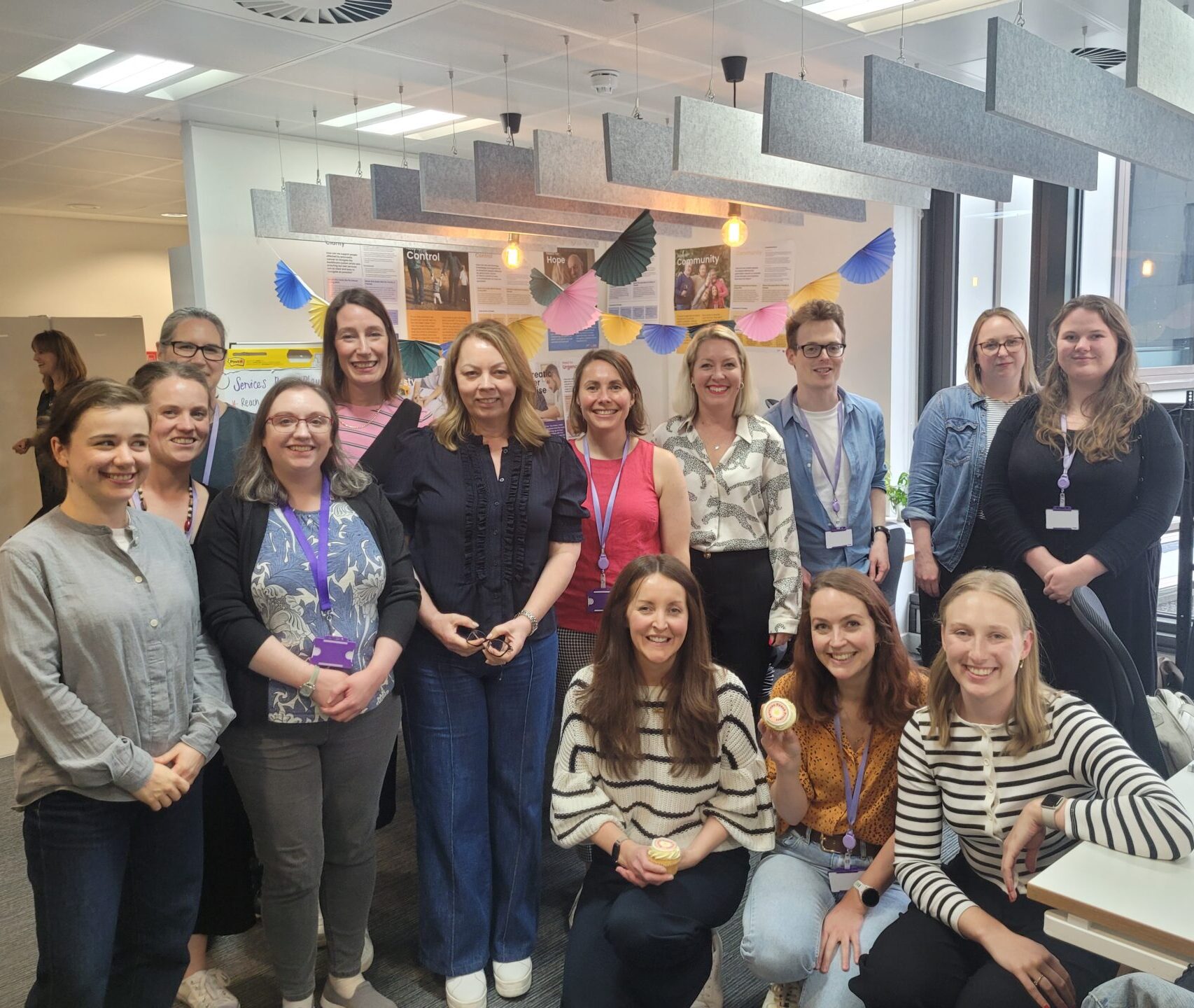
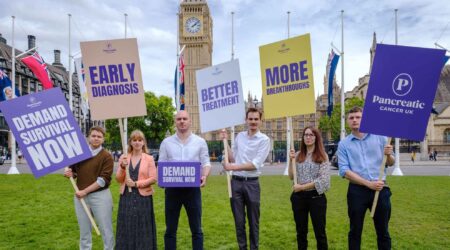
This time, we hear the staff perspective on what it has been like to work with people with lived experience on our Services Reach Project. Meet Aimee, our Senior Service Innovation Manager (pictured above with the rest of the team involved in the project). Aimee joins us to tell us more:
What is the Service Reach Project?
We want to increase the number of people accessing our services. But to do that, we need to understand what they want and what needs are not currently being met by what we currently provide. We want to design new services that consider these needs.
Why did you involve people with lived experience of pancreatic cancer?
It was key to this project to hear people’s experiences of being impacted by a pancreatic cancer diagnosis, whether or not they had used our support services before.
As well as interviewing 45 individuals about this, it was important for people with lived experience to help shape our entire approach to the project and, importantly, help us shape potential solutions we would later explore to make sure they were as effective as possible.
What kind of things did the people involved do?
The volunteers were with us from the very start, helping us to shape the project as a whole and the approach we would take.
We met every three weeks, and to start, we ran a series of sessions where they shared their experiences and insights about the needs they or their loved ones had. They supported us throughout the user testing, where they provided thoughts and feedback on ideas as they began to take shape, and we discussed key areas we wanted to delve deeper into.
And they’ve continued with us into this latest phase, where we are setting up the services to ensure we’re constantly referring to what they told us and following the insight.
The volunteers were with us from the very start, helping us to shape the project as a whole and the approach we would take.
What difference did involving people with lived experience have?
A huge difference!
The discussions we had the privilege of listening to gave us such a solid foundation to build our ideas from. They spoke with such honesty, and witnessing the way they bounced off one another, with one person’s story generating a memory for someone else in the group, made every conversation so powerful.
One such discussion was about the needs people have for community, to speak to others going through a similar experience, who ‘just get it’. One of the volunteers spoke about the WhatsApp group they are in with other couples facing a pancreatic cancer diagnosis and the comfort that group has brought to her and her husband. It was directly out of that discussion that the idea of “Circles” was created, which are WhatsApp and Facebook groups for people to join with others who ‘just get it’.
Find out more about Circles communities
How are participants kept up to date about what’s happened because of their involvement?
At the start of each of our three weekly calls, we share an update on where things are up to.
We don’t rush this part; we really want them to see the developments and understand the part they’ve played each time. They’ve all reflected on how they can see their words in all we’ve done, and I think that speaks volumes about the powerful role they’ve had and continue to have in this work.
We have further information about how lived experience shapes our work at Pancreatic Cancer UK, as well as how you can sign up to hear about the latest volunteering and participation opportunities:
Do you want to hear more stories about lived experience shaping our work? Hear from more personal experiences below:
Latest news
-

12 August 2026
New treatment option for pancreatic cancer in England
We are delighted that NHS England has announced that a new treatment combination will be available as a treatment for people with locally advanced pan...
Read more -
6 August 2026
Enter our prize draw with a chance to win £5,000
We're pleased to announce that we're running a Cash Prize Draw, launching 31st July 2026 and closing 11th September 2026.
Read more -
21 July 2026
Unlocking the potential of immunotherapy to treat pancreatic cancer
We take a look at how immunotherapy works, and explore the research that is taking place to investigate it’s potential as a new treatment for pancreat...
Read more

-
12 August 2026
New treatment option for pancreatic cancer in England
We are delighted that NHS England has announced that a new treatment combination will be available as a treatment for people with locally advanced pan...
Read more -
6 August 2026
Enter our prize draw with a chance to win £5,000
We're pleased to announce that we're running a Cash Prize Draw, launching 31st July 2026 and closing 11th September 2026.
Read more -
21 July 2026
Unlocking the potential of immunotherapy to treat pancreatic cancer
We take a look at how immunotherapy works, and explore the research that is taking place to investigate it’s potential as a new treatment for pancreat...
Read more