What is pancreatic ductal adenocarcinoma (PDAC)?

Pancreatic ductal adenocarcinoma (PDAC) is the most common type of pancreatic cancer.

Key facts

  • Pancreatic ductal adenocarcinoma is a type of exocrine pancreatic cancer.
  • About 95 out of 100 (95%) of all pancreatic cancers are exocrine cancers, and most of these are PDAC.
  • There are also rarer exocrine cancers.
  • PDAC can grow anywhere in the pancreas, though it is most often found in the head of the pancreas.
  • Symptoms can include tummy and back pain, weight loss, changes to your poo and jaundice. Read more about the symptoms of PDAC.

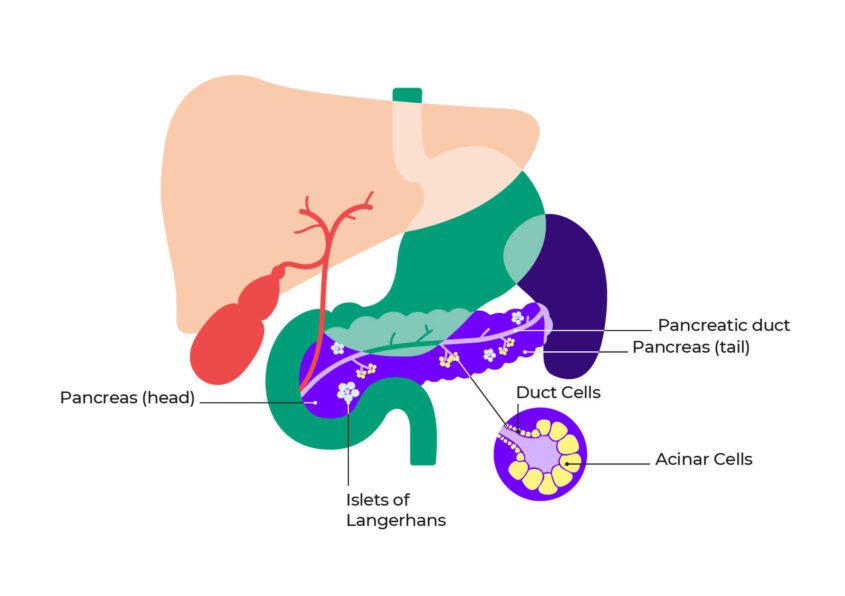
PDAC develops from cells lining small tubes in the pancreas called ducts (duct cells in the diagram below). These carry the digestive juices, which contain enzymes, into the main pancreatic duct.

Diagram showing the anatomy of the pancreas

The pancreas and features within it are shown, surrounded by nearby organs such as the stomach and spleen. Islets of Langerhans and Acinar cells look like small flowers on the pancreas and pancreas duct.

Rare exocrine cancers

Acinar cell carcinoma

Less than 1 out of 100 pancreatic cancers (1%) are acinar cell carcinoma. Acinar cell carcinoma is more common in men. It develops in the acinar cells at the end of the ducts (see diagram), which make the digestive enzymes. Symptoms can include tummy pain, weight loss, and feeling and being sick (nausea and vomiting).

Solid pseudopapillary neoplasms

Solid pseudopapillary neoplasms grow mostly in the body and tail of the pancreas. They are more common in younger women and are also the most common pancreatic tumour in children. Symptoms can include a lump in the tummy, tummy pain, weight loss and sickness.

Pancreatoblastoma

This rare type of pancreatic cancer mostly affects children. It is extremely rare in adults.

Other rare exocrine cancers

There are other very rare pancreatic exocrine cancers, including adenosquamous carcinoma.

Questions about pancreatic cancer?

If you have any questions about your cancer, speak to your medical team.
You can also speak to our specialist nurses on our Support Line.

Speak to our nurses
Specialist nurse, Lisa, talks on the phone to offer support.

References


We have listed some of the references to the sources used to write this information. If you would like the full list of references, email us at publications@pancreaticcancer.org.uk

  • Dinarvand P and Lai J. Solid Pseudopapillary Neoplasm of the Pancreas: A Rare Entity With Unique Features. Arch Pathol Lab Med. 141:990-995, 2017. doi: 10.5858/arpa.2016-0322-RS. [Accessed June 2025]
  • Glazer ES et al. Systematic Review and Case Series Report of Acinar Cell Carcinoma of the Pancreas. Cancer Control. 23(4), 2016. doi: 10.1177/107327481602300417 [Accessed June 2025]
  • Klein AP. Pancreatic cancer epidemiology: understanding the role of lifestyle and inherited risk factors. Nat Rev Gastroenterol Hepatol. 2021 Jul;18(7):493-502. doi: 10.1038/s41575-021-00457-x.
  • La Rosa S, Sessa F and Capella C. Acinar cell carcinoma of the pancreas: overview of clinicopathologic features and insights into the molecular pathology. Front. Med. 2:41, 2015. doi.org/10.3389/fmed.2015.00041 [Accessed June 2025]

Published August 2025

To be reviewed August 2028