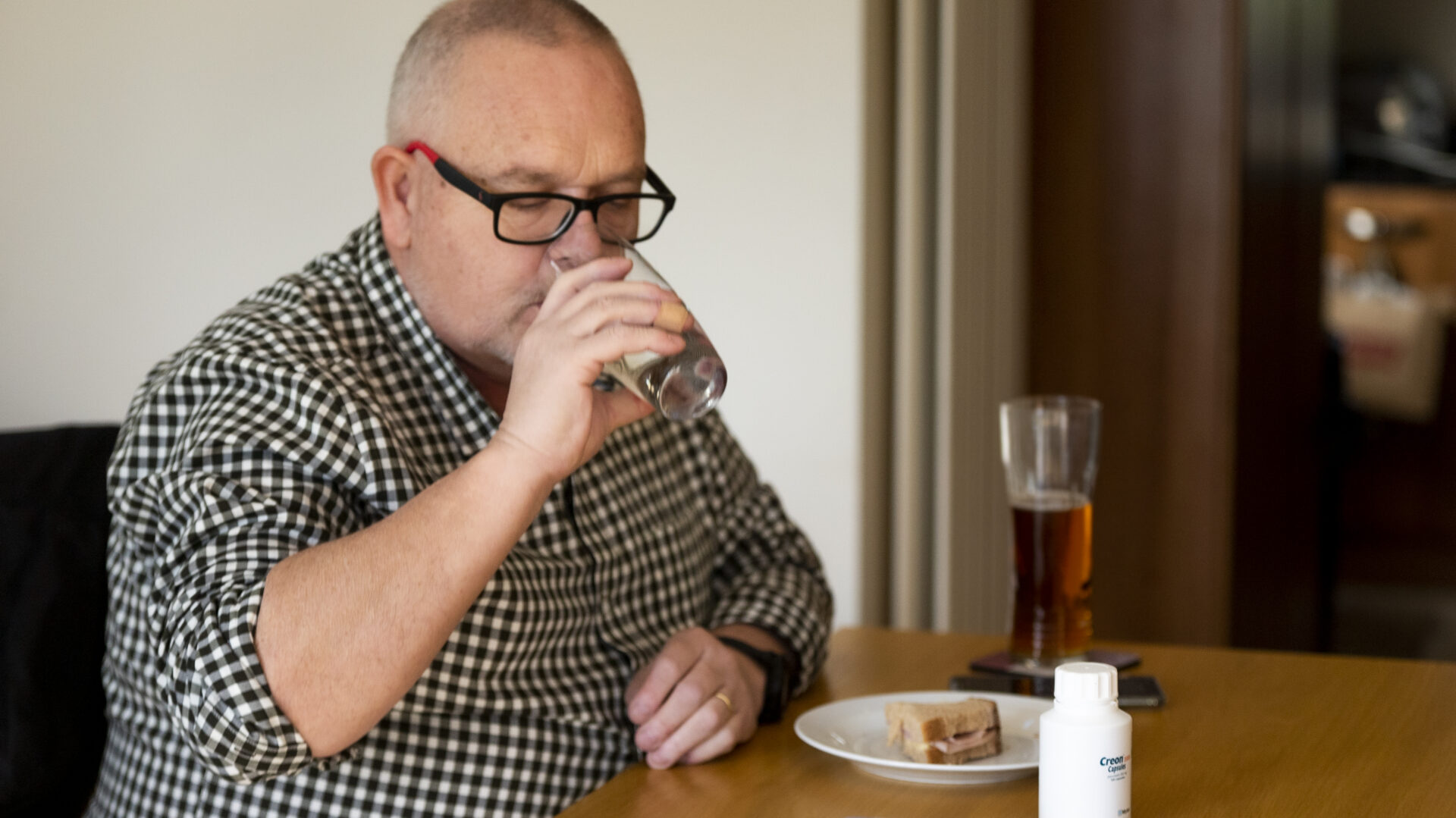
Man drinking water as he takes PERT and eats a sandwich

Managing diet and weight loss with tips from a dietitian

Our nurses
|
11 April 2023

Hello, it’s Lynne and Jeni, specialist pancreatic cancer nurses. We work on the Support Line at PCUK, helping people deal with symptoms of pancreatic cancer. In this blog we give you some information on three of the most common issues – digestion, weight loss and diabetes.

Problems with digestion

Having pancreatic cancer can affect what you eat and how well you digest your food. The pancreas produces enzymes, which break down food so that all the nutrients are absorbed into your body. Nutrients include protein, carbohydrates, fats, vitamins and minerals. Pancreatic cancer can reduce the amount of enzymes your body makes, and this causes problems with digestion.

It’s common for people with pancreatic cancer to get symptoms, such as:

  • losing your appetite
  • losing weight, or struggling to put weight back on
  • indigestion or heartburn
  • runny poo (diarrhoea)
  • finding it harder to poo (constipation)
  • pale, oily, floating poo (steatorrhoea)
  • tummy pain or discomfort
  • bloating or wind
  • feeling full up quickly
  • feeling sick
  • needing to poo quickly, especially after eating.

Read more about these diet symptoms.

Many of these problems can be managed with pancreatic enzyme replacement therapy (PERT). You may have heard of Creon or Nutrizym, which are common types of PERT.

You take PERT with your food. It helps by replacing the enzymes that your pancreas would normally make. The capsules help you to digest your food and absorb all the calories and nutrients you need. Taking PERT can help manage digestion symptoms and make a big difference to how you feel. Most people with pancreatic cancer will benefit from taking PERT.

If you have had surgery to remove all or part of the pancreas, this may also affect the number of enzymes that the pancreas makes. So you may need to take PERT.

In this video, Jeni talks about the benefits of PERT and how to take it properly.

We asked primary care network dietitian Lindsay Carnie for her tips on taking PERT.

“If you are taking PERT, it is important to take it with all meals, snacks and milky drinks including oral nutritional supplements. If you are taking more than one capsule, take half the dose with the first mouthful of food or drink and then take the rest throughout the meal or drink.

If you are struggling to remember to take your enzymes, try leaving a note on your fridge or cupboard. Or set a reminder on your phone at mealtimes. Don’t forget to have them with you when leaving the house, but don’t keep them in your pockets or the glove compartment of the car in warm weather, as this may stop them from working properly.”

Read more about how to take PERT.

If you have any symptoms related to diet or need advice about PERT, get help. If you have a dietitian involved in your care, give them a call. Your medical team or GP will also be able to give you advice and support. And of course you can contact us free on the Support Line.

Weight loss

Losing weight is a common symptom of pancreatic cancer. It can affect how you deal with the symptoms of cancer and your treatment. It can also be very upsetting and affect how you feel generally.

Getting medical advice to help manage your weight loss is really important. If you have a dietitian, they should be able to advise you on this and offer you support. You could also contact your hospital team or GP. They can all help you make changes to your diet so it contains more calories and protein.

You may be offered nutritional supplements, which are drinks or powders to take alongside your food. These contain extra calories, protein and vitamins. Take PERT every time you eat, and when you have nutritional supplements or milky drinks. This may help you maintain your weight.

If you have lost weight quickly, you may notice that you have lost some of the strength in your muscles. Having more protein in your diet and doing gentle physical activity can help rebuild this muscle strength. This can help you to feel better and have more energy.

A word of warning! There is a lot of conflicting advice online, making claims that certain diets or supplements can help people with cancer. More often than not, these claims are not scientific, with no evidence to support them. Don’t cut anything out of your diet, or take any additional supplements, without speaking to your dietitian, hospital team or GP first.

Diabetes

Diabetes is a condition where the amount of sugar (glucose) in your blood (your blood sugar level) is too high. This is called hyperglycaemia. The pancreas produces hormones called insulin and glucagon to control blood sugar levels. Pancreatic cancer can reduce the amount of these hormones, which can cause diabetes. This can also happen following surgery to remove the cancer. If you already had diabetes, pancreatic cancer can change how the diabetes is managed.

Symptoms of diabetes include:

  • feeling thirsty
  • wanting to pee often (more so at night)
  • tiredness
  • confusion
  • weight loss
  • blurred vision.

If you have any of these symptoms, please get in touch with your medical team or GP for advice and support.

If you are diagnosed with diabetes, you may see a specialist dietitian to help you manage your diabetes. If you haven’t seen a specialist dietitian, ask your doctor or nurse to refer you to one. You may also see a diabetes specialist nurse who will teach you how to monitor your blood sugar levels and help manage your diabetes medicine. Your GP may also help manage your diabetes. You may need to monitor your blood sugar level regularly. You may need tablets or insulin injections to help to control your diabetes.

There are different types of diabetes, and information on the internet about changing your diet may not be right for you because of pancreatic cancer. If you have lost weight or are struggling to eat, you may need more calories in your diet to help you put on weight. This may include eating foods that increase your blood sugar level. Your diabetes will need to be managed around this. Make sure you speak to your nurse, doctor or dietitian about this. Do not cut anything out of your diet without taking advice first.

Lindsay gives some further advice on diet and diabetes with pancreatic cancer.

“The main focus may be to stop you from losing more weight, as this can affect whether you can have treatment or how you cope with it. You should try to have a ‘little and often’ approach to eating, aiming for a high calorie, high protein diet. Your diabetes should be managed around what you are able to eat. Please speak with your dietitian, diabetes nurse or hospital team if you have any concerns.”

Managing diabetes if you have pancreatic cancer can be difficult and confusing. If you have any questions, speak to your dietitian, diabetes nurse or hospital team. You can also speak to our specialist nurses on our free Support Line.

We also have support and information on our website about managing diabetes if you have pancreatic cancer. For example, we have a webinar on pancreatic cancer and diabetes, presented by diabetes specialists and our specialist pancreatic cancer nurses. We talk about the different types of diabetes, share practical information on managing diabetes alongside pancreatic cancer, and explain the support that’s available. You can watch a recording of the webinar any time or sign up for other webinars.

If you have any questions about pancreatic cancer, your treatment or care, you can of course speak to one of our nurse specialists on the Support Line.

Remember – you are not alone. Pancreatic Cancer UK is here to support you through this challenging time.

Lynne & Jeni

Nurses Lynne (left) and Jeni (right)

First published: May 2020

Updated March 2025

To be reviewed March 2028