
Research
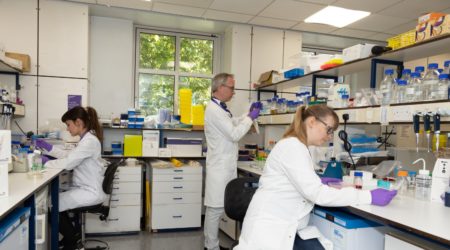
Ground-breaking research into new treatment for pancreatic cancer underway in Scotland
Pioneering research into a new potentially ground-breaking treatment for pancreatic cancer has begun. The research, lead by University of Glasgow scientist Dr Seth Coffelt, aims to help make desperately needed new immunotherapy treatments a reality for future patients.
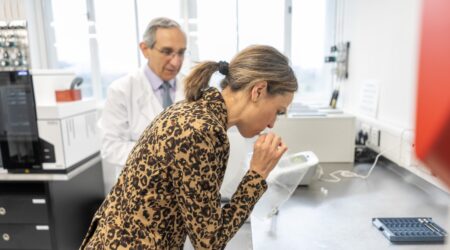
World-first pancreatic cancer breath test
We’re thrilled to announce that we are funding a new clinical study to develop a breath test that could detect pancreatic cancer early enough to save thousands of lives a year.
Four things we’ve learnt about early detection
Our researchers have laid the vital groundwork for the development of new tests for the early detection of pancreatic cancer. Here we take a look at what they have achieved so far.
Cambridge researchers to improve treatment options for deadliest common cancer by understanding how it grows
Researchers at the University of Cambridge will use a new cutting-edge laboratory technique to study which proteins cause uncontrolled cell-growth in pancreatic cancer and enable the devastating disease to spread rapidly.

Chemo before surgery shown to improve one-year survival
A new clinical trial has found that chemotherapy before surgery significantly increased the one-year survival of people with pancreatic cancer whose tumour was borderline resectable.
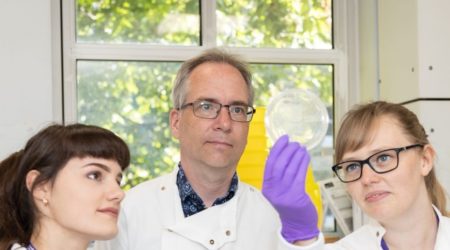
The realities of research
Research into pancreatic cancer has been underfunded and under-resourced for decades, resulting in little improvement in survival rates for this devastating disease. Here’s how we're taking that on.
New blood test to detect cancer
Our CEO at Pancreatic Cancer UK, Diana Jupp has provided commentary on the new blood test that aims to detect more than 50 types of cancer before symptoms arise.
How your support is funding world-class research
In 2021/22, your support meant that we could fund £1.8m in research grants – more than ever before – bringing our total research spend to £10m. Our Head of Research, Dr Chris MacDonald, explains how we’re using this money to give our researchers the best chance of making breakthroughs.
New hope for treating pancreatic cancer: Targeting the ‘recycler’ protein USP25
An innovative new study may revolutionise pancreatic cancer therapy by targeting the ‘recycler’ protein USP25 to reduce the growth of cancer cells.
Our response to “gremlin therapy” research that suggests pancreatic cancer can be reversed
New research from the Institute of Cancer Research suggests that it could be possible to reverse a key process that enables pancreatic cancer cells to grow and spread in the body.

Our Research Involvement Network: Shaping the future of pancreatic cancer research
Dr Naureen Starling is a Consultant Medical Oncologist at the Royal Marsden NHS Foundation Trust specialising in the treatment of gastrointestinal cancers, as well as researching new therapies.
Our response to the mRNA pancreatic cancer vaccine trial
Our Head of Research, Dr Chris MacDonald comments on the exciting trial results presented at the American Society of Clinical Oncology conference in Chicago.