Looking to chat with others who are going through surgery?
Our WhatsApp group is here. Talk to people who ‘just get it’.
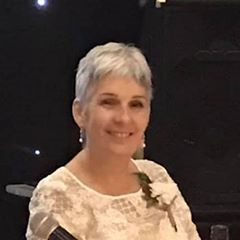
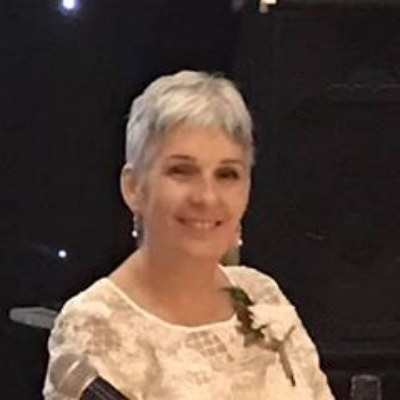
This is my story. A story of hope.
Every individual is unique, and we all respond to situations in diverse ways, just as people react differently to a cancer diagnosis and its treatments. The factors influencing these outcomes could be attributed to genetics, life experiences, and physical wellbeing, nobody really knows? What I do know though, is that I am defying the odds, I am surviving a particularly devastating form of cancer.
In 2018, while immersed in modernising the house that was to become my new home with my new partner Bryan, we attributed the decline in my health and fitness to the hectic pace of our lives. The symptoms I experienced had been intermittently present for several years. I had discussed each of these symptoms with different GPs at various times, but none were thoroughly investigated.
In September 2018, I visited my GP due to relentless tiredness and feeling very unwell. Physically I looked well, and I was maintaining my ability to walk long distances. Blood tests were ordered, and an ultrasound scan was requested. During this visit, I inquired about the possibility of cancer, to which the GP assured me that it was unlikely since I appeared too healthy.
The ultrasound scan promptly revealed the root of my health issues, a 62mm x 38 mm tumour on the tail of my pancreas, accompanied by multiple liver deposits and enlarged lymph nodes. The radiologist suspected pancreatic cancer with liver metastasis. He explained that I would need a biopsy to confirm these preliminary findings. I had little knowledge about the pancreas, its function, or its location in the body. The shock hit me hard as I delved into research on pancreatic cancer. I discovered that it was an aggressive cancer, known for how difficult it is to treat and with an extremely low survival rate. The fact that it had metastasized to my liver made the situation even more daunting. The overwhelming sense of doom set in, I believed I was going to die, and I was going to die soon.
Suddenly, a thought struck me: at just 58 years old, missing out on my pension and bus pass seemed so typical. The irony of not becoming the lively, mischievous old-age pensioner, causing havoc for my children, on mobility scooters with my friend hit me. Humour unexpectedly became my coping mechanism during those initial weeks and allowed me to discuss my prognosis without tears.
Before making the challenging decision to forgo any treatment, I researched as much as I could about the disease.
The following weeks were consumed by a series of appointments. The conclusive results from a biopsy and a CT scan delivered the devastating confirmation. I had pancreatic adenocarcinoma cancer in the tail of my pancreas, accompanied by numerous liver metastases. My initial consultation was with a surgeon, who conveyed the stark reality that there were no viable treatment options for a cure. The only available course of action was palliative treatment, aimed at enhancing and prolonging my life.
Two weeks after my ultrasound scan, when I met with the oncologist, the toil on my health was evident. I had shed a significant amount of weight (I had always dreamed of being slim, but this was not my intended method!) I struggled with eating, I slept excessively, and I experienced pain in my left shoulder and right side. The grim reality of my situation loomed, both Bryan and my children supported my decision to forgo treatment.
Entering the room to meet the oncologist felt surreal. I was about to receive a sentence with no chance of appeal or reprieve, a death sentence in the most literal sense. The boxes of tissues nearby hinted at the gravity of the news to come: a prognosis of three to five months to live without treatment, and five to ten months with treatment.
In that room, in that moment, I changed my mind, and looking back, I am grateful that I did. While I had already made the decision to forgo treatment, the oncologist’s suggestion that I was too unwell for it shocked me. Despite being so poorly, something within me resisted.
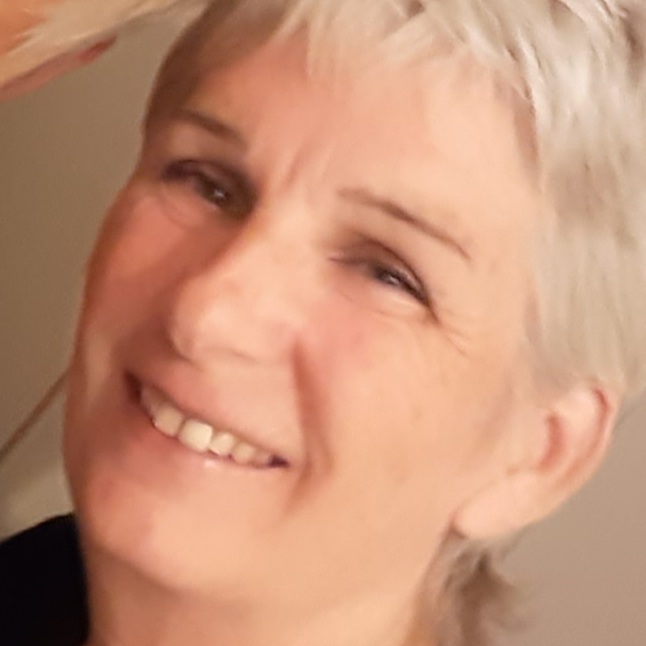
It was decided that I would have the chemo called FOLFIRINOX. FOLFIRINOX is a cocktail made up of 4 different drugs. My first chemo session was at the end of October 2018, and I was so frightened.
The initial three months seemed to pass in a blur.
As the treatment progressed, I began putting on weight and looked very well. A scan in January 2019 brought encouraging news: my tumour had significantly reduced, and the liver metastases were responding well to the treatment. To visualise this progress, I started drawing my tumour on paper and cutting it out after each scan. This visual representation allowed me to track the shrinking process and was a great encouragement to keep going.
I fell into a 2-week routine, with blood tests on Tuesdays, consultations with the oncologist on Wednesdays, and treatment on Thursdays. To maintain my fitness, I walked to and from the hospital for as long as I could. I took breaks from chemo, I planned activities to look forward to, I kept walking and I went away whenever possible.
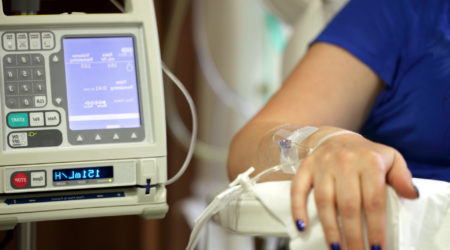
After spending up to eight hours receiving chemo in the hospital, I would return home with a bottle of chemo that slowly dripped through my picc line from what resembled a baby’s feeding bottle strapped to my waist. The bottle would be removed by district nurses at my home or by hospital staff on a Sunday morning. From Tuesday to Thursday of the following week, I would feel unwell, staying close to home. While I never experienced physical sickness and only spent one full day in bed, dealing with diarrhoea proved to be quite debilitating. Gradually, I would improve day by day, gearing up for the next cycle. After 19 rounds of FOLFIRINOX, it was mutually agreed that a break was necessary as the chemo was taking its toll. I was struggling to walk down the corridor to the chemo ward, my legs like jelly. The chemo was also affecting my mental health.
The initial period after my diagnosis brought a flurry of visitors, phone calls, and flowers. However, as weeks and months passed, the frequency of visits and calls dwindled. People resumed their normal lives, and I became very lonely.
Throughout this journey, a few special family members and several friends stood by my side, offering unwavering support and encouragement. Additionally, I made new friends, friends I might never have met if not for my cancer diagnosis.
My cancer diagnosis affected those closest to me, particularly Bryan. All their lives were temporarily put on hold as they supported me through my emotional and physical struggles. Their own fears and concerns were seldom discussed, and they too had to navigate a new and often lonely reality.
As the routine of appointments, tests, and treatment took over, I felt increasingly isolated from the active life that had defined me. I sensed myself being left behind and I became dependent on friends inviting me out, gradually losing the confidence and motivation to ask them because I felt like I was a burden. My life seemed to stand still. The constant fear and obsession with cancer controlled every aspect of my thinking from day one, making it challenging for those around me.
My daughter’s discovery of a clinical trial marked a significant turning point in my journey. With the support of my oncologist, my application for a place on an immunotherapy vaccine trial was completed and following tests and an interview with the supervising professor, I was granted a place on the trial. I received my first immunotherapy trial vaccine which was in September 2019.
Remarkably, by this time, the tumours in my liver had vanished, and the primary tumour on my pancreas had significantly reduced to 14mm x 9.5mm. After one more vaccine four weeks later, I took a break from chemo which lasted 14 months. I was so well during that time, life was good.
In November 2020, a blood test revealed an unexpected rise in my CA19, a tumour marker. A subsequent scan unveiled the surprising development that the tumour in my pancreas had started to grow. I started FOLFIRINOX again, but it knocked me for six and I really struggled. Acknowledging the impact on my quality of life, the chemo was reduced to 40%, and the frequency reduced to every three weeks. The primary goal now was to prioritize my overall wellbeing.
After another 10 rounds, I was told that the chemo had probably stopped working. The tumour was no longer shrinking.
However, following a series of blood test, and scans, it was confirmed that the only active cancer was in my pancreas and I was offered a distal pancreatectomy and splenectomy. After three years of hearing that my cancer was incurable, I was now being presented with an operation that had the potential to extend my life or even provide a cure.
The surgeon, guided by intuition, took a chance, recognising that if I was willing to take the risk, so was he and his team. I will be forever indebted and grateful to the surgeon and his team for taking such a huge risk and for thinking outside the box
Eight weeks after my 31st round of FOLFIRINOX, I underwent a distal pancreatectomy and splenectomy.
The recovery proved to be an extended and challenging journey. I was very weak for a long time, and I worried that I would never get better. However, with time, I made gradual progress, encouraged by Bryan, my family, and some remarkable friends.
Being told that I was cancer-free came with a mix of emotions and complexities. The news meant that there was no visible cancer at the point of the operation, but there may be cancer that cannot yet be seen.
Having mentally prepared for the possibility of dying from my cancer and having prepared for that reality, being told I was cancer-free was difficult. The news posed a dilemma of reconciling newfound hope with a deeply ingrained belief that I didn’t have a future. The future, which had seemed elusive for three years, now appeared, it was very daunting, full of uncertainties and very scary.
While my family and friends were over the moon with my news, I found myself struggling to feel the same. I would cry at the silliest of things. I just couldn’t comprehend a future for myself.
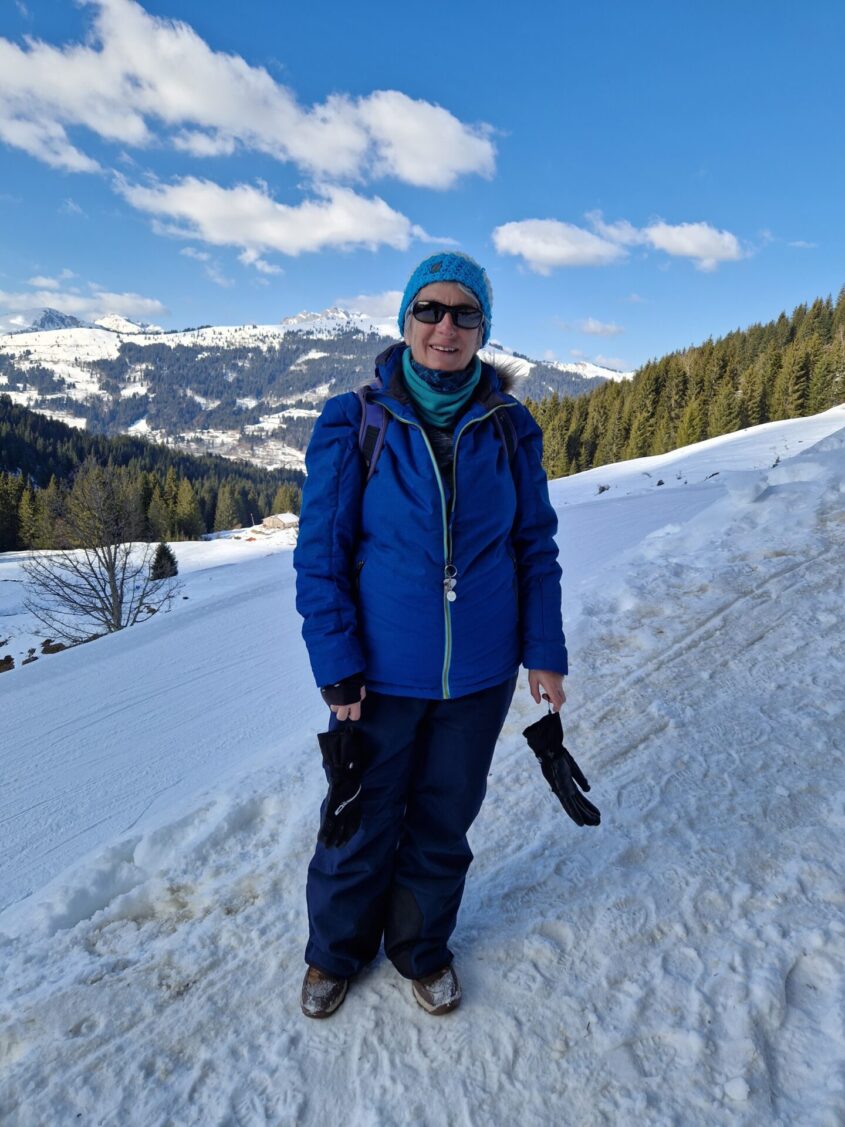
Remarkably, I am now at seven years and 2 months post-diagnosis, surpassing the initial predictions and challenging the odds. Four years and three months post-surgery, I am just allowing myself to think that I have a future. No one knows if my cancer will return, I think it will, but I will cross that bridge when and if it happens. For now, I will continue to live the best life that I can.
Since my diagnosis, I have witnessed my eldest grandson transition to secondary school. He has remarkably raised approximately £8000 for pancreatic cancer charities, undertaking long-distance walks each year.
I have seen my granddaughter start school and achieve so much. My grandson, born in January 2019, has now started school and is now joined by a lively 3-year-old brother, grandsons I never thought I would meet. Seeing my family grow and all their achievements fills me with immense pride and happiness.
It’s not about waiting for the storm to pass. It’s about learning to dance in the rain.
Reflecting on such a journey prompts a deep appreciation for the sacrifices made by those many people who have stood by me. Bryan and I were still navigating the early stages of our relationship when I received my diagnosis. Throughout the challenging moments, he never complained. Instead, he patiently listened to my tears, fears, and uncertainties, all the while keeping his own worries to himself. His unwavering positive outlook and calm demeanour became my compass, guiding me through the toughest times.
Bryan’s two daughters, Catherine and Liz, son-in-law David and two grandsons Sam and Joe have consistently been a source of support and care.
I must also mention three remarkable friends, Heather, Jane, and Diana, whose unwavering presence has been a priceless support during these challenging years.
I am extremely blessed and very proud to have an extraordinary, loving, and humorous family who have been by my side throughout this journey. My daughter Lisa, my son Richard and his wife Natalie, my son Rob and his husband Stevie, as well as my grandchildren Oliver, Chloe, James, and Harry and my brother Jim and his wife Alison. Their unwavering support and love has been a constant source of strength to me.
Our WhatsApp group is here. Talk to people who ‘just get it’.