Useful medical words

We explain some of the medical words that you may hear when you are finding out about pancreatic cancer and how it is treated.

You may hear medical words when you are finding out about pancreatic cancer and how it is treated.

Find medical words beginning with:

A – B
C – D
E – G
H – L
M – P
R – Z

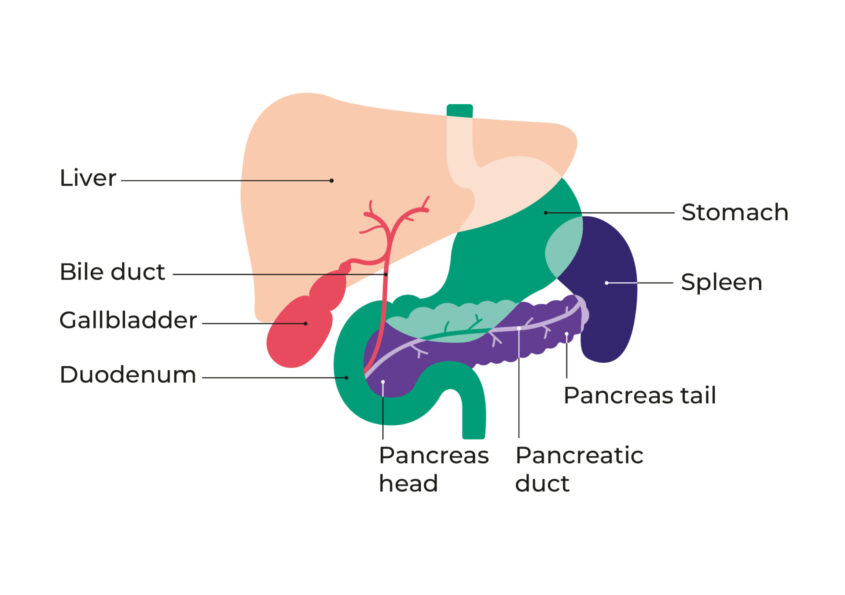
You may find the diagram of the pancreas and surrounding organs helpful.

The organs within the tummy are shown together. The liver and gallbladder are on the left, in front of the stomach. The pancreas sits just behind the bottom of the stomach, pointing out to the right, with the tip of its tail behind the spleen and the duodenum curving in a C shape around the pancreas head. The bile duct (from the gallbladder) and the pancreatic duct both empty into the duodenum.


A-B

Absorption

Once your food has been broken down through digestion, the nutrients move into the blood so that they can be used by the body. This process is called absorption. Read more about diet and digestion.

Acid relux

When acid from the stomach travels up the food pipe (oesophagus). It can cause a burning feeling in your chest or throat, called heartburn.

Adjuvant

Adjuvant treatment is given alongside or after the main treatment. This may be adjuvant chemotherapy or radiotherapy that is given after surgery. Or it may be other medicines that are given alongside painkillers to help manage any pain.

Advanced pancreatic cancer

Advanced pancreatic cancer is cancer that has spread from the pancreas to other parts of the body, such as the lungs or liver. It is also known as metastatic cancer. It is not possible to remove advanced pancreatic cancer with surgery.

Ampulla of Vater

The ampulla of Vater is the area where the pancreatic duct and the bile duct meet at the duodenum. This is also known as the hepatopancreatic ampulla.

Analgesic

An analgesic is a medicine that relieves pain. Read more about pancreatic cancer and pain.

Ascites

Ascites is a build-up of fluid in the tummy that may cause swelling. Read more about ascites and how it is managed.

Bile

Bile is a fluid which helps digestion. It is made by the liver and stored in the gallbladder or carried in the bile ducts to the duodenum.

Bile ducts

Bile ducts are tubes that carry bile from the liver to the small intestine.

Biliary stent

A biliary stent is a small tube that’s put into your bile duct. It should open a blocked bile duct and let the bile drain through the bile duct again. Biliary stents are used to treat jaundice.

Bilirubin

Bilirubin is a yellow substance found in bile that comes from the breakdown of old red blood cells. A build-up of bilirubin in the blood can cause jaundice.

Biopsy

A biopsy is a test that removes small tissue samples to examine under a microscope. A biopsy is the only way of being absolutely certain that you have pancreatic cancer. Read more about a biopsy.

Borderline resectable pancreatic cancer

Borderline resectable pancreatic cancer is cancer that has grown very close to the major blood vessels near the pancreas. It may be possible to remove the cancer, but it depends which blood vessels are affected and how far the cancer has grown.

Bypass surgery

If pancreatic cancer is blocking the bile duct or the duodenum, bypass surgery may be used to relieve the blockage. This can treat symptoms such as jaundice or being sick.

Return to top

C-D

Cachexia

Cachexia is a loss of fat and muscle in people with long term illnesses, such as cancer. Read more about weight loss and reduced appetite.

Calories

A calorie is a measure of how much energy you get from the food you eat. People with pancreatic cancer often need to have more calories to help them maintain their weight, or put on weight.

Cannula

This is a thin, plastic tube that is put into a vein, usually in the arm or hand. It is used to give some medicines, like chemotherapy.

CBT (cognitive behavioural therapy)

CBT is a type of talking therapy that can help you deal with problems by changing how you think and feel about problems and worries.

Chemoradiotherapy

Chemoradiotherapy is a treatment that uses chemotherapy together with radiotherapy.

Chemotherapy

Chemotherapy uses drugs to kill cancer cells. It is one of the main treatments for pancreatic cancer.

Clinical psychologist

A professional who treats people with emotional (psychological) problems to reduce their distress and improve their emotional wellbeing.

Coeliac plexus nerve block

A nerve block is a treatment that blocks nerves from sending messages to the brain. It can be used to treat pancreatic cancer pain. You may be able to have a nerve block in the coeliac plexus, which is a bundle of nerves behind the pancreas.

Complementary therapies

Complementary therapies work alongside your medical treatments – don’t stop any cancer treatments. Always speak to your doctor before trying any complementary therapies, as some may affect your cancer treatment. And tell your complementary therapist about your cancer treatment. Read more about complementary therapies.

Constipation

Constipation is when you find it harder to poo. Read more about constipation.

Consultant

A senior doctor – for example, a consultant oncologist.

Counsellor

A professional who helps people deal with emotional problems by helping them talk through issues and find solutions. Also called a therapist.

CT scan

A CT (computerised tomography) scan uses x-rays to create a 3D picture of the pancreas and the organs around it. It is used to diagnose pancreatic cancer. Read about what a CT scan involves.

Dehydration

When the body loses more water than it takes in. It might happen if someone is being sick a lot, or they have diarrhoea (frequent runny poo).

Diabetes

Diabetes is a condition where the amount of glucose (a type of sugar) in your blood is too high.

Diarrhoea

Diarrhoea is runny poo. Read more about changes to your bowel habits.

Diet

Your diet is the food you eat. When we talk about symptoms or problems around diet, we mean problems that can affect your eating and digestion. We are not talking about the kind of diet people often go on to help them lose weight. Read more about diet and pancreatic cancer.

Dietitian

A dietitian is a health professional who provides expert advice about diet and nutrition, including how to manage symptoms caused by problems with digestion.

Digestion

Digestion is what your body does to break down your food to get the nutrients from it.

Dose

Dose is the amount of drug that is given at one time.

Duodenal stent

A duodenal stent is a tube that is put into the duodenum (the first part of the small intestine). Duodenal stents are used to treat blockages in the duodenum caused by the cancer. It should hold open the duodenum and let the food pass through.

Duodenum

The duodenum is the first part of the small intestine.

Return to top

E-G

Enzymes

Enzymes are made by parts of the body, including the pancreas. Different enzymes do different things. Pancreatic enzymes help to break down food.

Endoscopic retrograde cholangio-pancreatography (ERCP)

An ERCP is a test used to diagnose problems with the pancreas. It is used if your bile duct is blocked, to put in a small tube called a stent to relieve the blockage. Read more about an ERCP and what it involves.

Endoscopic ultrasound scan (EUS)

An EUS is a test used to diagnose pancreatic cancer. A thin, flexible tube (called an endoscope) is passed through your mouth and down into your stomach. The tube has a light at the end and a small ultrasound probe to create pictures of the pancreas. Read more about an EUS and what it involves.

Fatigue

Fatigue is extreme tiredness. It is not the same as just feeling tired. You might feel both mentally drained and physically exhausted.

FDG-CT/PET scan

This scan combines a CT scan with a PET (positron emission tomography) scan to build up a clearer picture of the cancer and how it is behaving. It can be used to learn more about the stage of the cancer and how best to treat it. Read more about this scan and what it involves.

Gallbladder

This is a small organ under your liver that stores bile and releases it into your duodenum (first part of the small intestine) when needed.

Gastroenterologist

A gastroenterologist is a specialist in diseases and disorders of the digestive system, including the stomach, intestines, liver and pancreas.

Genes

Genes carry the information that controls our growth and how our bodies work. Occasionally, there may be changes in genes which means that someone is more likely to get a disease. This type of change in a gene is often called a fault or mutation. Read more about genes.

Glucose

Glucose is a type of sugar found in foods and drinks. Our body turns all carbohydrates that we eat (such as bread, rice, pasta and cereals) into glucose. It is carried in the blood and our body uses it for energy.

Return to top

H-L

Heartburn

This is a burning feeling in your chest or throat. It’s commonly caused by acid reflux. It can be a symptom of digestion problems.

Hepato-pancreato-biliary (HPB)

Hepato-pancreato-biliary is a term that covers the liver, pancreas and bile ducts. HPB doctors and nurses specialise in treating pancreatic diseases.

Hereditary pancreatitis

Pancreatitis is an inflammation of the pancreas. Hereditary pancreatitis is a rare type of pancreatitis that runs in families. People with hereditary pancreatitis may be more likely to get pancreatic cancer.

Hormones

Hormones are chemical messengers that are carried in your blood and affect different processes in your body.

Hospice

A hospice provides specialist care and support for people with an illness that can’t be cured, and for their families. For example, they can manage symptoms such as pain. They may also offer complementary therapies and emotional, spiritual and social support. You can go to the hospice for an appointment or for the full day to use their services before returning home. Or you may stay at the hospice for a short time, for example to get symptoms under control. Hospices are not just for people in the final stages of life.

Immunotherapy

Immunotherapy is a type of cancer treatment that uses the immune system to attack cancer cells.

Infusion

This is a way of giving chemotherapy and some other medicines through a drip into a vein.

Insulin

Insulin is a hormone that is produced by the pancreas and helps to control blood sugar levels.

Jaundice

Jaundice can be a symptom of pancreatic cancer. It develops when there is a build-up of bilirubin in the blood. It causes yellow skin and eyes, dark urine, pale poo and itchy skin. Read more about jaundice.

Laparoscopy

A laparoscopy is a small operation that is sometimes used to confirm a diagnosis of pancreatic cancer, and to check whether the cancer can be removed by surgery. Read more about a laparoscopy.

Localised pancreatic cancer

Localised pancreatic cancer is cancer that is contained in the pancreas. It is the earliest stage of pancreatic cancer and it is possible to remove the cancer with surgery. It is also known as early or resectable pancreatic cancer.

Locally advanced pancreatic cancer

Locally advanced pancreatic cancer is cancer that has spread outside the pancreas. It may have spread to the large blood vessels near the pancreas, or to a number of lymph nodes.

Lymph nodes

Lymph nodes are small, oval structures found throughout the body. They are part of the immune system.

Return to top

M-P

Magnetic resonance cholangio-pancreatography (MRCP)

An MRCP is a type of MRI scan. It gives a clear picture of the bile duct or pancreatic duct, and any blockages in them. Read more about an MRCP.

Magnetic resonance imaging (MRI) scan

An MRI scan uses magnets and radio waves to build up detailed pictures of the pancreas and surrounding areas. Read about what an MRI scan involves.

Minimally invasive

This is a way of doing surgery or tests that avoids large wounds, often using special tools to reach the area.

Nutrients

Your body needs nutrients, which you get from your food. They include protein, carbohydrates, fats, vitamins and minerals. Nutrition means the food and drink you have and how it affects your health.

Nutritional supplements

Nutritional supplements are specially formulated drinks, powders and foods that help to increase your calorie intake and help you to gain weight. Read about nutritional supplements.

Occupational therapist (OT)

An occupational therapist a professional who provides advice and equipment to help you stay independent and carry on doing the things you want to do.

Oedema

Oedema is swelling caused by a build up of fluid in parts of your body such as your arms, legs, feet and genitals.

Oncologist

An oncologist is a doctor who is an expert in treating cancer. A medical oncologist is an expert on drug treatments. A clinical oncologist also manages radiotherapy treatment. Read more about the medical team that treats pancreatic cancer.

Opioid painkillers

Opioid painkillers are strong painkillers such as morphine. They are used to treat moderate and severe pain.

Palliative care

Palliative care teams help people with cancer that can’t be cured to live as well as possible for as long as possible. They provide specialist care to manage symptoms such as pain, and emotional symptoms like depression and anxiety. They provide support to family members too. Palliative care is not just for people in the final stages of life.

Pancreatic duct

The pancreatic duct is the small tube that carries pancreatic juices (which contain pancreatic enzymes), from the pancreas to the duodenum.

Pancreatic enzyme replacement therapy (PERT)

PERT is used if your pancreas is not making enough enzymes. PERT comes as capsules containing pancreatic enzymes to help break down food. Examples include Creon®, Nutrizym® and Pancrex®.

Pathology

Pathology is an examination of tissue and cells under a microscope. A pathologist is a doctor specialising in pathology.

Physiotherapist

A physiotherapy is a professional who can give you exercises and advice to help you keep active.

Psychiatrist

A psychiatrist is a doctor who treats people with mental health problems through medicines and recommending other treatments such as counselling.

Pylorus-preserving pancreaticoduodenectomy

This is a type of surgery to remove pancreatic cancer. The procedure is similar to the Whipple’s operation, but none of the stomach is removed. Read more about a pylorus-preserving pancreaticoduodenectomy.

Return to top

R-Z

Radiologist

A radiologist is a doctor specialising in using x-rays to diagnose and treat disease.

Radiotherapy

Radiotherapy uses radiation to destroy cancer cells.

Resectable pancreatic cancer

Resectable pancreatic cancer is cancer that is contained in the pancreas and can be removed by surgery. It is also known as early or localised pancreatic cancer.

Small intestine

The small intestine is part of the bowel, where food is mostly digested and absorbed.

Social worker

A social worker is a professional who helps people deal with problems such as living independently, improving their wellbeing or accessing welfare support.

Stage

The stage of cancer describes the size of the cancer and whether it has spread. The stage of pancreatic cancer is used to decide what the best treatment option is.

Steatorrhoea

Steatorrhoea is caused by fat in poo. Poo may be pale, look oily, smell horrible, and be difficult to flush down the toilet.

Stools

Stools is another word for poo. It is also called faeces or bowel motions.

Supportive care

Some hospitals have supportive care teams. These teams provide similar services to palliative care teams. They can see people at all stages of treatment and care, to manage symptoms.

Unresectable pancreatic cancer

Unresectable pancreatic cancer is cancer that has spread outside the pancreas. It can’t be removed by surgery.

Upper gastrointestinal

The upper part of the digestive system including the stomach, pancreas, liver, gall bladder and bile ducts.

Whipple’s procedure

The Whipple’s operation is one of the most common types of surgery for pancreatic cancer. The surgeon will remove:

  • head of the pancreas
  • duodenum
  • gallbladder
  • part of the stomach
  • part of the bile duct
  • and some of the nearby lymph nodes.

Return to top

Published November 2025

Review date November 2028